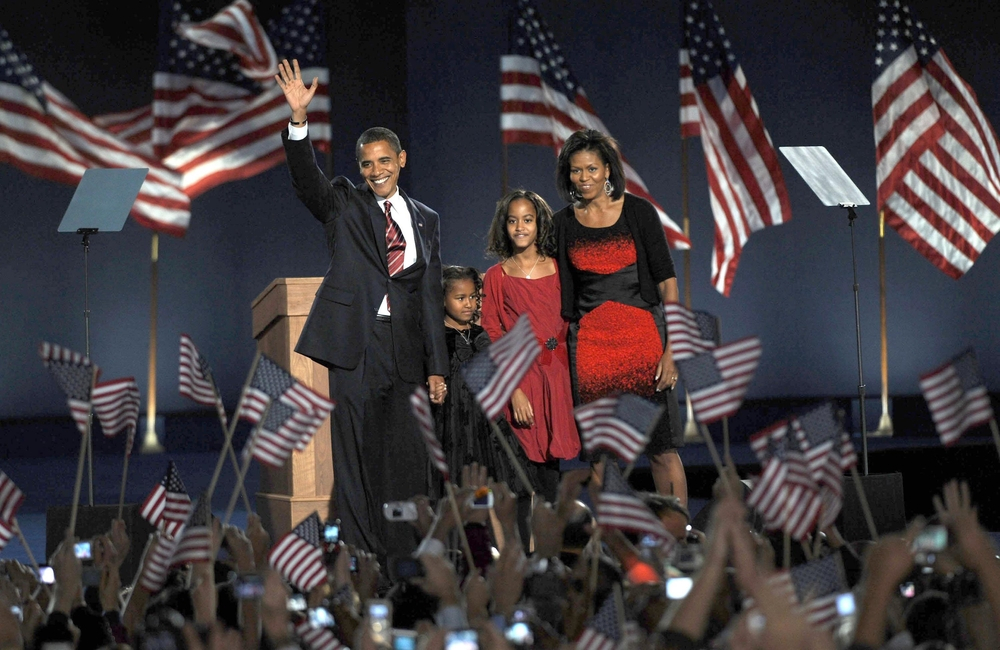
Elected as the 44th President of the United States

Political
10 min read
Updated By: History Editorial Network (HEN)
Published:
On November 4, 2008, Barack Obama was elected as the 44th President of the United States, making history as the first African American to hold the nation’s highest office. His victory marked a significant moment in American history, symbolizing progress in the long struggle for civil rights and racial equality. Obama’s election was driven by a message of hope, change, and unity, resonating with a broad and diverse electorate.
Election Results by the Numbers
Popular Vote:
Barack Obama (Democratic Party): 69,498,516 votes (52.9%)
John McCain (Republican Party): 59,948,323 votes (45.7%)
Obama won the popular vote by a margin of nearly 9.6 million votes, translating to a 7.2 percentage point lead over McCain. This was a decisive victory, reflecting widespread support across various demographic groups.
Electoral Vote:
Barack Obama: 365 electoral votes
John McCain: 173 electoral votes
Obama secured 28 states and the District of Columbia, while McCain won 22 states. Key battleground states like Ohio, Florida, and Virginia, which had been crucial in previous elections, were won by Obama, highlighting his broad appeal across different regions of the country. His victory in traditionally Republican states like Indiana and North Carolina further underscored the depth of his support.
Key Factors in Obama’s Victory
Economic Crisis: The 2008 election took place against the backdrop of a severe financial crisis, often referred to as the Great Recession. The economic downturn, marked by the collapse of major financial institutions, rising unemployment, and widespread foreclosures, created a climate of anxiety and uncertainty. Obama’s message of change and his focus on economic recovery resonated with voters who were eager for new leadership to navigate the country through the crisis.
Change and Hope: Obama’s campaign was built around the themes of "hope" and "change," which became defining slogans of his candidacy. His ability to inspire and mobilize voters, particularly young people and minorities, played a crucial role in his victory. Obama’s message appealed to a desire for a break from the policies of the Bush administration and a move towards a more inclusive and progressive vision for America.
Grassroots Mobilization and Digital Strategy: Obama’s campaign revolutionized political campaigning through its use of digital media and grassroots organization. The campaign effectively harnessed the power of social media, email, and text messaging to communicate with supporters, raise funds, and mobilize volunteers. This innovative approach allowed Obama to build a broad and energized coalition, particularly among young voters, African Americans, and other minority groups.
Opposition to the Iraq War: Obama’s early and consistent opposition to the Iraq War distinguished him from many other candidates, including his primary opponent, Hillary Clinton, and his general election opponent, John McCain, who supported the war. This stance helped him gain significant support among Democrats and independents who were disillusioned with the war and its aftermath.
McCain’s Challenges: John McCain, a seasoned senator and war hero, faced several challenges during his campaign. His selection of Alaska Governor Sarah Palin as his running mate initially energized the conservative base but ultimately proved controversial, raising concerns about her readiness for national office. Additionally, McCain struggled to distance himself from the unpopular policies of the Bush administration, particularly on the economy.
Voter Turnout and Demographics
The 2008 election saw a significant increase in voter turnout, with approximately 58.2% of eligible voters casting ballots. This was the highest turnout since 1968. Obama’s victory was fueled by strong support from key demographic groups:
Young Voters (ages 18-29): 66% voted for Obama, compared to 32% for McCain.
African Americans: 95% supported Obama, reflecting overwhelming enthusiasm and mobilization within the Black community.
Hispanics: 67% voted for Obama, a substantial increase from the 2004 election, indicating a shift towards the Democratic Party.
Women: 56% of female voters supported Obama, compared to 43% for McCain.
Obama’s Victory Speech
On the night of November 4, 2008, Obama delivered his victory speech to a crowd of over 200,000 people in Grant Park, Chicago. His speech, which began with the words "If there is anyone out there who still doubts that America is a place where all things are possible," captured the historic significance of the moment. He spoke of the challenges ahead, including the economic crisis, but also expressed optimism about the future, emphasizing unity and the power of the American people to bring about change.
#MomentsOfLife #MoofLife_Moment #MoofLife #Obama2008 #ElectionHistory #BarackObama #AmericanHistory
Primary Reference
VIDEO: C-SPAN: President-Elect Barack Obama Victory Speech
Explore the Life Moments of
 AI Twin