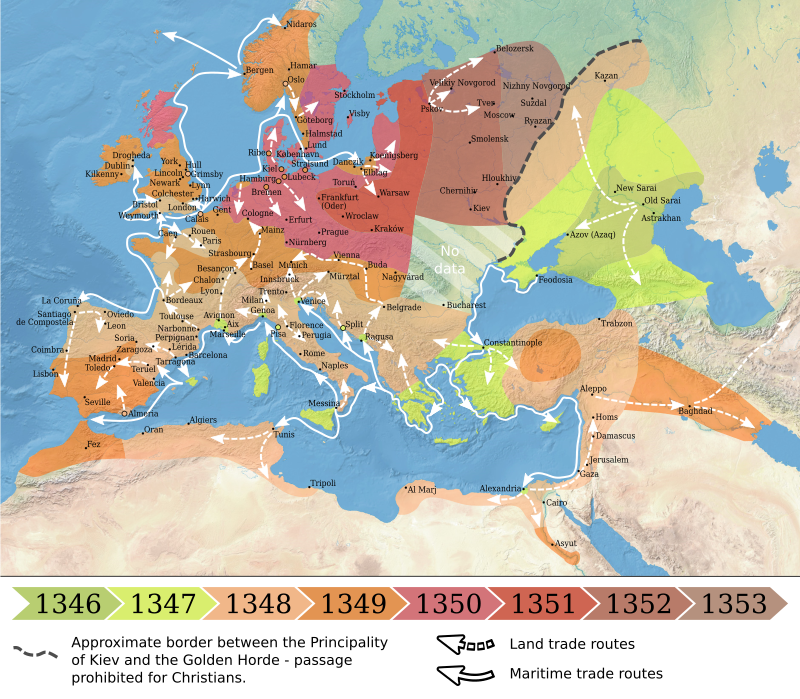
Tragedy strikes as the Black Death clouds Norway.
Norway
Historic Event
Social Impact
3 min read
Updated By: History Editorial Network (HEN)
Published:
In 1349, Norway was struck by the Black Death, a devastating pandemic that had already swept through much of Europe. The plague, caused by the bacterium Yersinia pestis, spread quickly via fleas infesting rats, decimating populations with its high mortality rate.
The impact on Norway was catastrophic, with approximately half of the population succumbing to the disease. The once-thriving communities were brought to their knees as the Black Death ravaged villages and towns, leaving behind a trail of death and despair.
The economic and social consequences were profound, as the sudden loss of manpower led to labor shortages and economic instability. The already struggling society was further weakened by the breakdown of social structures and the overwhelming grief of losing loved ones.
The Black Death in Norway marked a dark period in the country's history, leaving a lasting impact on its population and shaping its future trajectory. The resilience and perseverance of the survivors, coupled with efforts to implement public health measures, eventually helped Norway recover from the devastation wrought by the plague.
#Norway #BlackDeath #Pandemic #Epidemic #HistoricEvent #SocialImpact #Resilience
Primary Reference
[The black death in Norway]

Explore the Life Moments of
 AI Twin