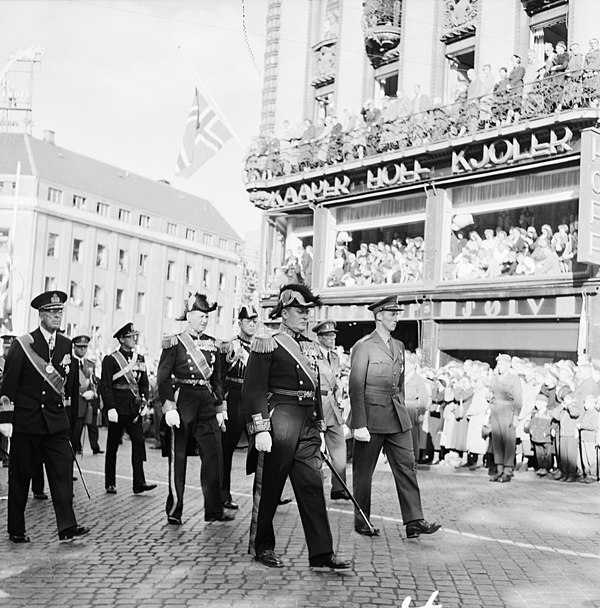
Monarch's passing alters the course of history, marking the end of an era.
Norway
Monarchy
3 min read
Updated By: History Editorial Network (HEN)
Published:
King Haakon VII of Norway passed away at the royal residence in Oslo. He had reigned for over four decades and played a crucial role during World War II, symbolizing Norwegian resistance against the Nazi occupation. His death was met with deep mourning and marked the end of an era for the Norwegian monarchy. Haakon VII was known for his unwavering dedication to his people and his commitment to democracy.
Following his passing, his son King Olav V ascended to the throne, continuing the legacy of the Norwegian royal family. The death of Haakon VII left a void in the hearts of many Norwegians, who remembered him fondly for his leadership and integrity. The nation came together to honor his memory and reflect on his contributions to Norway's history.
The death of King Haakon VII signified a significant moment in Norwegian history, as the country bid farewell to a beloved monarch who had steered them through turbulent times. His legacy continued to inspire future generations, shaping the identity of the Norwegian monarchy and its role in the country's governance.
#Norway #KingHaakonVII #Monarchy #Legacy
Primary Reference
Haakon VII - Wikipedia

Explore the Life Moments of
 AI Twin