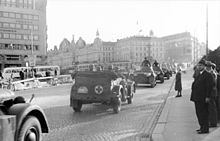
Germany's invasion of Norway during World War II to secure strategic advantages.
Norway
Military
3 min read
Updated By: History Editorial Network (HEN)
Published:
In one of World War II's crucial events, Germany invaded Norway, strategically positioning itself for control over the North Sea and resources like iron ore. The invasion was prompted by concerns over potential British occupation of Norway, threatening Germany's supply routes.
The invasion took Norway by surprise, despite prior diplomatic efforts to maintain neutrality. As German forces advanced, the Norwegian government and royal family evacuated to the north. The Norwegian military, though brave, faced overwhelming German might.
The impact of Germany's invasion of Norway was profound. It sparked intense fighting and resistance, as Norwegian forces, supported by British and French troops, engaged in battles across the country. The struggle for control of strategic locations like Narvik intensified, resulting in significant casualties on both sides.
Ultimately, Germany's occupation of Norway lasted for several years, leading to a period of hardship for the Norwegian people. The resistance movement remained active throughout the occupation, maintaining hope and fighting for liberation.
Decades later, Norway reflects on the bravery of those who resisted the invasion and the enduring significance of that challenging period in its history. The invasion of Norway by Germany serves as a reminder of the human cost of war and the resilience of nations in the face of adversity. #WWII #Occupation #Resistance #NorwegianHistory
Primary Reference
World War II - The Royal House of Norway

Explore the Life Moments of
 AI Twin