Revolutionizing Immunology: Nobel Laureates' Contributions to Monoclonal Antibodies
Sweden
Science
Medical
4 min read
Updated By: History Editorial Network (HEN)
Published:
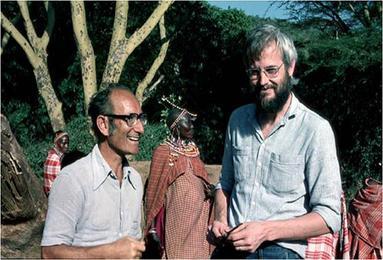
Niels K. Jerne, Georges J.F. Köhler, and César Milstein were awarded the Nobel Prize in Physiology or Medicine for their seminal contributions to the understanding of immune system specificity and the production of monoclonal antibodies. Jerne's theoretical framework explained how the immune system can recognize a vast array of antigens. In contrast, Köhler and Milstein developed a technique to produce monoclonal antibodies, allowing for the creation of identical antibodies specific to a single antigen.
Jerne's work provided significant insights into the mechanisms of immune response, establishing that the body has a pre-existing repertoire of antibodies. Köhler and Milstein built on this foundation by creating a method to fuse antibody-producing cells with myeloma cells, resulting in hybridomas that could be cloned to produce continuous and uniform antibodies, termed monoclonal antibodies.
This breakthrough had a profound impact on both basic scientific research and clinical applications. Monoclonal antibodies revolutionized diagnostics and therapeutic interventions, particularly in cancer treatment, autoimmune diseases, and infectious diseases. Their production enabled more accurate disease detection, targeted therapies, and personalized medicine approaches.
By enhancing the precision of scientific investigations and medical treatments, their work significantly advanced the field of immunology. The technological innovation of monoclonal antibody production continues to be a cornerstone in biomedical research and pharmaceutical development.
#NobelPrize #Immunology #MonoclonalAntibodies #MedicalInnovation #MoofLife
Primary Reference
César Milstein - Wikipedia
Explore the Life Moments of
 AI Twin