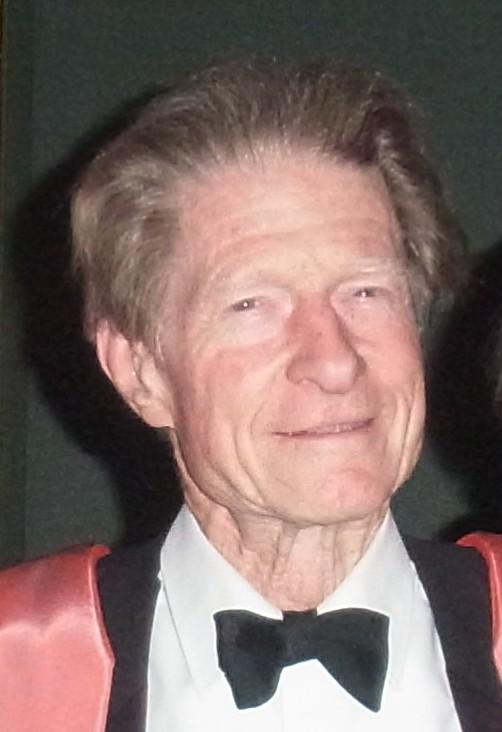
Nobel Prize winners Gurdon and Yamanaka's groundbreaking work in cell biology revolutionizes medical research.
Sweden
Science
Medicine
4 min read
Updated By: History Editorial Network (HEN)
Published:
John B. Gurdon and Shinya Yamanaka received the Nobel Prize in Physiology or Medicine for their breakthrough in cell biology. Gurdon, through experiments conducted in the 1960s, demonstrated that the DNA from specialized cells could drive the development of an organism. His work showed that mature cells retained the genetic information necessary to form all cell types.
Decades later, Yamanaka built on Gurdon's findings by identifying specific factors that can reprogram mature cells to revert to a pluripotent state. These reprogrammed cells, called induced pluripotent stem cells (iPSCs), can develop into any cell type. This discovery opened new possibilities for regenerative medicine, enabling the creation of patient-specific cells for therapy and research without using embryonic stem cells.
Their combined efforts have significantly advanced our understanding of cellular development and plasticity. The ability to generate iPSCs has implications for treating diseases, modeling diseases in vitro, and testing new drugs. Researchers have been able to develop patient-specific cell lines to study genetic diseases and explore personalized medical treatments.
The Nobel committee highlighted how these discoveries have revolutionized understanding of how cells and organisms develop. The techniques emerging from Gurdon's and Yamanaka's work have already begun influencing medical research and biotechnology. Ongoing studies continue to explore the full potential of iPSCs in clinical applications and basic science. The unanimous sentiment within the scientific community is that these findings represent a fundamental shift in biology and medicine.
#MoofLife #NobelPrize #StemCells #RegenerativeMedicine #CellBiology #MedicalResearch
Explore the Life Moments of
 AI Twin