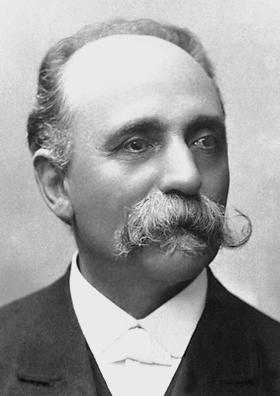
Groundbreaking work on nervous system structure by Golgi and Cajal shapes modern neuroscience.
Sweden
Science
4 min read
Updated By: History Editorial Network (HEN)
Published:
Camillo Golgi and Santiago Ramón y Cajal were recognized for their groundbreaking work on the structure of the nervous system, receiving a joint accolade for their contributions. Golgi, an Italian physician and scientist, developed a pioneering staining technique known as the "black reaction" or Golgi stain. This method involved using potassium dichromate and silver nitrate to visualize individual neurons and their components, revealing previously unseen details of the nervous system.
Santiago Ramón y Cajal, a Spanish neuroscientist, made significant advancements using Golgi's staining technique. Cajal's meticulous studies led him to articulate the neuron doctrine, which proposed that neurons are the fundamental units of the nervous system and communicate with each other through specialized junctions. This work contradicted the then-prevailing reticular theory, which posited that the nervous system was a continuous network.
The collaboration of their discoveries provided crucial insights into the cellular structure and function of the brain and nervous system. Their findings laid the foundation for modern neuroscience, influencing both theoretical and practical aspects of the discipline.
Golgi's and Cajal's shared recognition underscored the importance of innovative methodologies and critical thinking in advancing scientific knowledge. Their work has had a lasting impact, shaping contemporary understanding of neurological processes and disorders.
#MoofLife #Neuroscience #NobelPrize #GolgiStain #NeuronDoctrine
Primary Reference
Cajal, Golgi, Nansen, Schäfer and the Neuron Doctrine
Explore the Life Moments of
 AI Twin