Revolutionizing Radio Astrophysics: Ryle, Hewish, and Nobel Recognition
Sweden
Science
3 min read
Updated By: History Editorial Network (HEN)
Published:
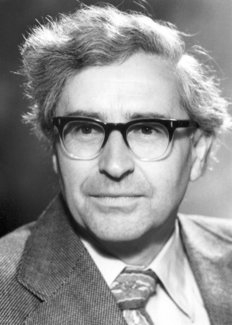
Martin Ryle and Antony Hewish received recognition for their groundbreaking contributions to radio astrophysics. These scientists made significant advancements; Ryle developed the aperture synthesis technique, revolutionizing the way radio telescopes image the universe. This method allows for high-resolution mapping of celestial objects by combining signals from multiple antennas, simulating a much larger telescope. It led to unprecedented insights into the structural formation of galaxies and the broader universe.
Similarly, Antony Hewish, along with his team, made a monumental discovery in the field with the identification of pulsars. Pulsars, highly magnetized rotating neutron stars that emit beams of electromagnetic radiation, were first observed by Hewish's student, Jocelyn Bell Burnell. This discovery provided new understanding of stellar evolution and the behavior of matter under extreme conditions.
Their work had a profound impact on astrophysics, influencing both theoretical and observational frameworks. Aperture synthesis opened new possibilities for astronomical observations, paving the way for various modern radio telescopic arrays. The recognition by the Nobel Committee underscored the importance of these developments.
#MoofLife #Astrophysics #NobelPrize #RadioAstronomy #Pulsars #ScientificDiscovery
Primary Reference
Antony Hewish. 11 May 1924â•fl13 September 2021
Explore the Life Moments of
 AI Twin