Pioneering Contributions in Astrophysics and Nuclear Physics: Chandrasekhar and Fowler's Nobel Prize Achievements
Sweden
Science
4 min read
Updated By: History Editorial Network (HEN)
Published:
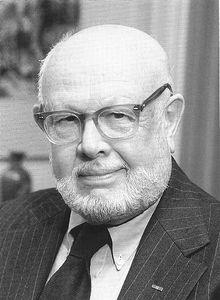
On October 12, 1983, Subrahmanyan Chandrasekhar and William A. Fowler were awarded the Nobel Prize in Physics for their pioneering contributions to astronomy and nuclear physics. Chandrasekhar's theoretical framework on the structure and evolution of stars greatly advanced our understanding of stellar dynamics. His most acclaimed work, the Chandrasekhar limit, describes the maximum mass of a stable white dwarf star. This critical threshold—approximately 1.44 times the mass of the Sun—demonstrates that if a white dwarf's mass exceeds this limit, it would collapse, leading to a supernova or forming a neutron star.
William A. Fowler was recognized for his expertise in astrophysical nuclear reactions. Through meticulous research, he elucidated how elements are formed in the universe—a process known as nucleosynthesis. Fowler's work provided explanations for the formation and abundance of elements, transforming our conception of stellar interiors and the lifecycle of stars. He collaborated with renowned astronomer Fred Hoyle to propose the stellar nucleosynthesis theory, significantly impacting both theoretical and observational astronomy.
The recognition of these two scientists marked an intersection of theoretical astrophysics and experimental nuclear physics. Their achievements have had long-lasting implications, guiding subsequent research in cosmology and space sciences. Their integrated models and empirical evidence continue to influence modern astrophysical advancements and the universal quest to comprehend stellar phenomena.
#MoofLife #ChandrasekharLimit #Nucleosynthesis #Astrophysics #NobelPrize #Astronomy #PhysicsNobel
Primary Reference
William Fowler | Nobel Prize, Astrophysics, Cosmology | Britannica
Explore the Life Moments of
 AI Twin