Nobel Prize Winners Discover J/psi Meson: Advancing Particle Physics Through Charmed Quark Discovery
Sweden
Science
4 min read
Updated By: History Editorial Network (HEN)
Published:
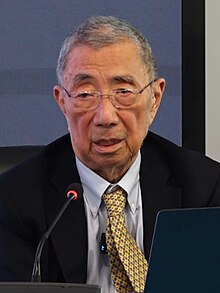
Burton Richter and Samuel C.C. Ting were awarded the Nobel Prize in Physics for their independent yet concurrent discovery of a heavy elementary particle. The discoveries were carried out at the Massachusetts Institute of Technology (MIT) by Ting and at the Stanford Linear Accelerator Center (SLAC) by Richter. Their work unveiled a new kind of particle, which played an instrumental role in helping physicists understand the intricacies of quantum mechanics and contributed profoundly to the field of particle physics.
The particle discovered was later named the J/psi meson, an unexpected addition that provided evidence for the existence of the charmed quark. This was a significant step in confirming the quark model, which previously proposed the existence of fundamental particles like up, down, and strange quarks. The discovery of the charmed quark expanded the understanding of the Standard Model, enriching knowledge about the building blocks of matter.
This breakthrough had far-reaching implications, enhancing scientists' ability to study and explain the fundamental forces and particles that constitute the universe. It also spurred further theoretical and experimental research, leading to advancements in quantum chromodynamics (QCD), a theory that describes the strong interaction which binds quarks together.
From a broader perspective, their recognition underlined the importance of international collaboration and competition in scientific research. Both researchers, working from different institutions, arrived at similar conclusions around the same time, underlining the universality and objective nature of scientific inquiry.
#NobelPhysics #ParticlePhysics #QuarkModel #JpsiMeson #ScientificDiscovery #MoofLife
Primary Reference
Samuel C. C. Ting - Wikipedia
Explore the Life Moments of
 AI Twin