Nobel Prize Winners' Contributions to Physics: Tunneling Phenomena and Josephson Effects.
Sweden
Science
4 min read
Updated By: History Editorial Network (HEN)
Published:
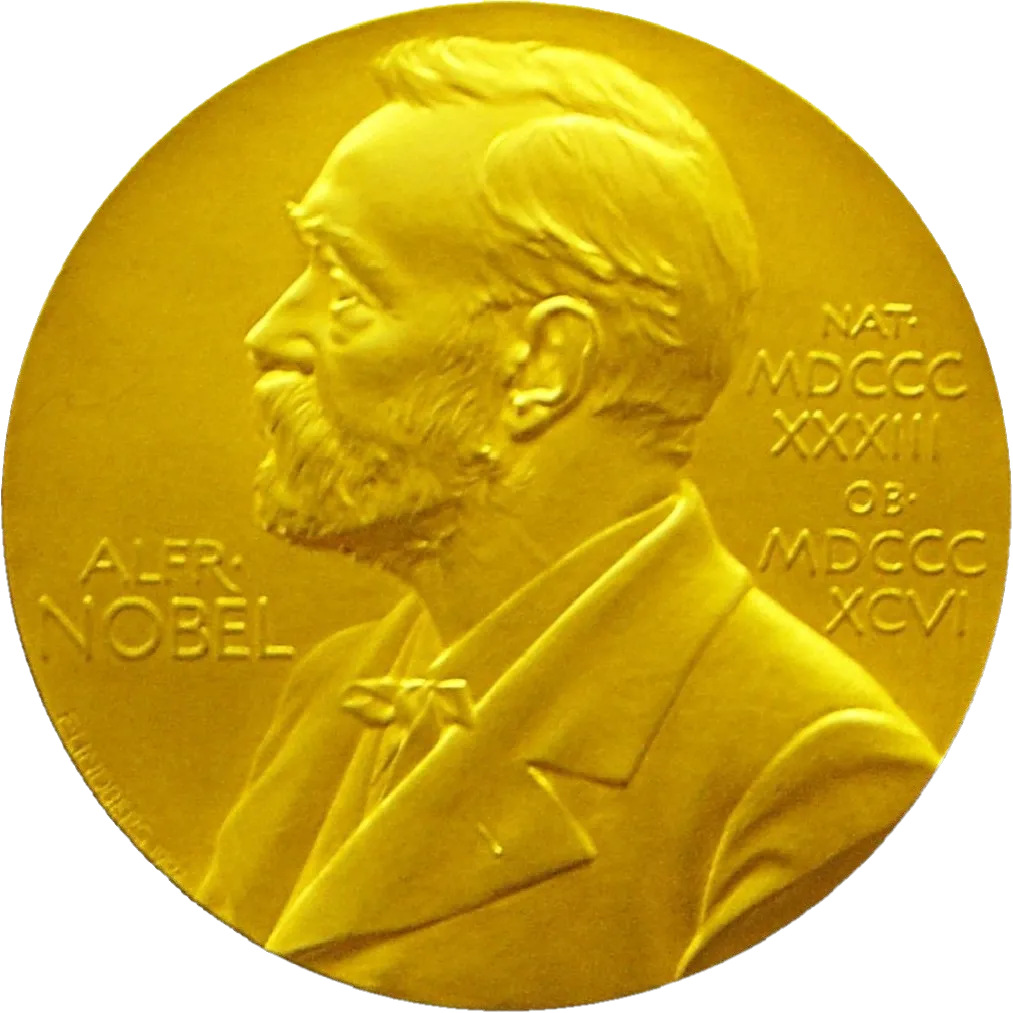
In recognition of their pioneering contributions to the field of physics, Leo Esaki, Ivar Giaever, and Brian D. Josephson were awarded the Nobel Prize in Physics. Leo Esaki and Ivar Giaever were honored for their experimental discoveries related to tunneling phenomena in semiconductors and superconductors, respectively. Esaki's research, conducted in the late 1950s, led to the development of the Esaki diode, which functions based on electron tunneling, fundamentally impacting electronic device engineering. Giaever's work, performed in the 1960s, demonstrated electron tunneling in superconductors, contributing substantially to the understanding of superconductivity's microscopic properties.
Brian D. Josephson received the award for his theoretical predictions concerning the properties of a supercurrent flowing through a tunnel barrier, a phenomenon now known as the Josephson effects. Josephson's theoretical work, formulated in the early 1960s, posited that supercurrents could tunnel through insulating barriers separating superconductors, which was later confirmed experimentally. This breakthrough paved the way for advancements in superconducting quantum devices, including SQUIDs (superconducting quantum interference devices) used in highly sensitive magnetometers.
These discoveries hold profound significance in condensed matter physics and quantum mechanics. They have numerous practical applications, ranging from semiconducting and superconducting materials to quantum computing and medical imaging technologies. The impact of their work is continuously observed in modern technological innovations and scientific research methodologies.
#PhysicsResearch #NobelPrize #TunnelingPhenomena #Superconductivity #QuantumMechanics #MoofLife
Primary Reference
Nobel Prize in Physics | IEEE Council on Superconductivity
Explore the Life Moments of
 AI Twin