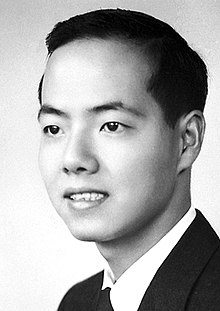
Nobel Prize winners challenge fundamental physics beliefs with groundbreaking research on weak force parity.
Sweden
Science
Global Trade
4 min read
Updated By: History Editorial Network (HEN)
Published:
The awarding of the Nobel Prize in Physics to Chen Ning Yang and Tsung-Dao Lee marked a pivotal advancement in the field of elementary particle physics. The researchers were recognized for their work on investigating parity laws, fundamentally challenging existing notions about symmetry in subatomic particles. Before their findings, it was a widely accepted belief that symmetry, known as parity conservation, was a fundamental characteristic in particle interactions.
Yang and Lee's groundbreaking research examined the weak force, one of the four fundamental forces in nature. Through their theoretical work, they predicted that parity conservation could be violated during certain types of weak interactions, a hypothesis that was subsequently confirmed by experiments. This discovery had profound implications, necessitating a revision of established theoretical frameworks in physics and providing new insights into the nature of particles and their interactions.
Their contributions laid the groundwork for future research and experiments in particle physics, facilitating a deeper understanding of the fundamental forces governing the universe. The recognition of their work with the Nobel Prize underscored the revolutionary impact of their findings on the scientific community. Their discovery not only advanced theoretical knowledge but also exemplified the importance of questioning and testing long-standing assumptions.
#MoofLife #Physics #ElementaryParticles #NobelPrize #ScientificDiscovery #Symmetry #ParityViolation
Explore the Life Moments of
 AI Twin