
Nobel Prize Winners: Accelerating Universe and Dark Energy Discovery
Sweden
Science
4 min read
Updated By: History Editorial Network (HEN)
Published:
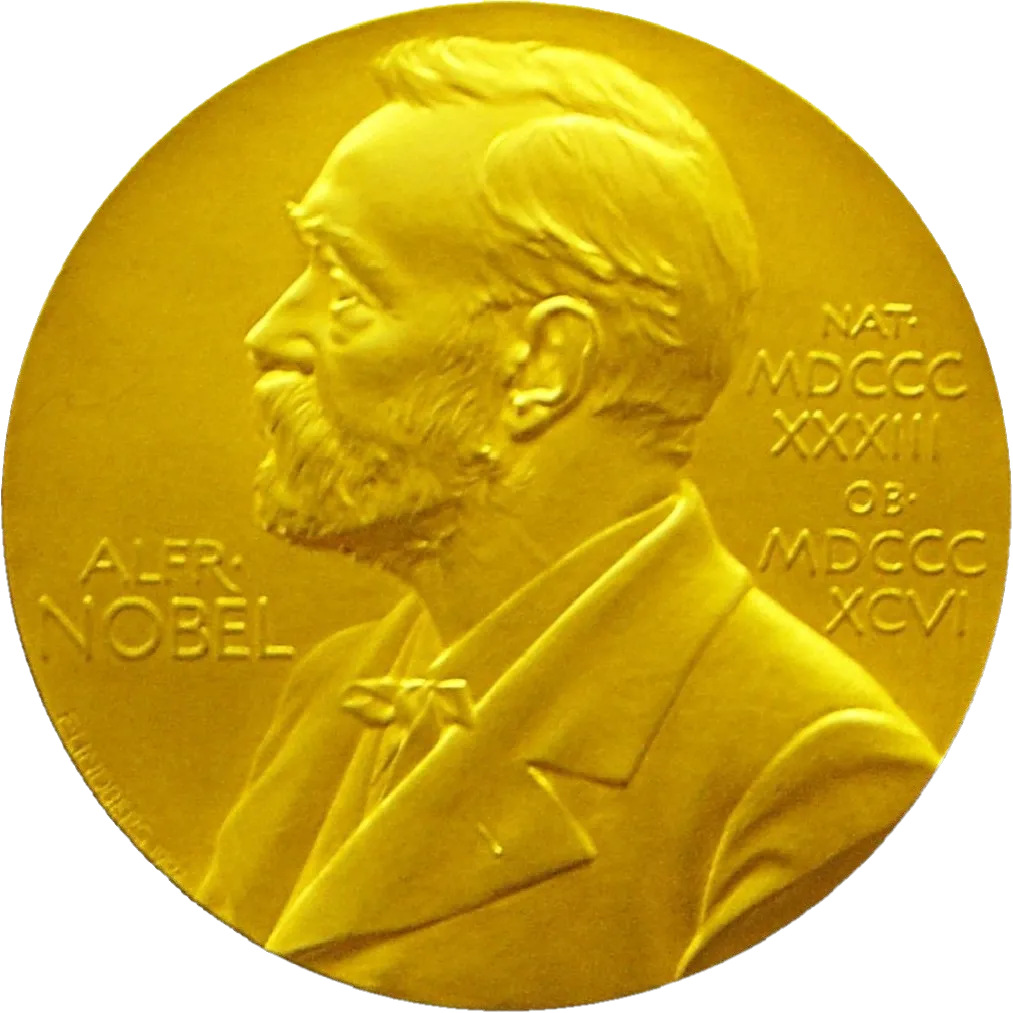
Saul Perlmutter, Brian P. Schmidt, and Adam G. Riess were awarded the Nobel Prize in Physics for their ground-breaking discovery that the Universe's expansion is accelerating, based on observations of distant supernovae. This discovery was made possible through meticulous analysis of data collected from Type Ia supernovae, which served as reliable standard candles, enabling the measurement of cosmic distances with unprecedented precision.
Perlmutter led the Supernova Cosmology Project, while Schmidt and Riess were key figures in the High-Z Supernova Search Team. Their independent yet concurrent research efforts culminated in the pivotal revelation that contradicted previous expectations of a decelerating cosmic expansion due to gravitational forces.
The recognition of an accelerating universe was a transformative moment for cosmology, providing strong evidence for the existence of dark energy, a mysterious form of energy that constitutes approximately 68% of the universe. This finding not only reshaped our understanding of the cosmos but also prompted new theoretical models and experimental investigations into the nature of dark energy and its role in the evolution of the universe.
Their contributions have had lasting impacts on both observational and theoretical astrophysics. By refining techniques for measuring cosmic distances and challenging existing hypotheses, the work of Perlmutter, Schmidt, and Riess has driven significant advancements in our comprehension of the universe's large-scale structure and underlying physical principles.
#NobelPrize #Cosmology #DarkEnergy #Supernovae #Physics #MoofLife #AcceleratingExpansion
Explore the Life Moments of
 AI Twin