Nobel Prize: Hofstadter and Mössbauer's Contributions to Atomic and Nuclear Structures
Sweden
Science
4 min read
Updated By: History Editorial Network (HEN)
Published:
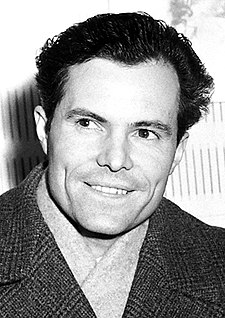
The Nobel Prize in Physics was awarded to Robert Hofstadter and Rudolf Mössbauer for their groundbreaking contributions to the understanding of atomic and nuclear structures. Hofstadter was recognized for his pioneering electron scattering studies that provided crucial insights into nucleon structure. His research demonstrated that protons and neutrons, the components of an atomic nucleus, have a complex internal structure rather than being point-like particles. This work utilized high-energy electrons to probe the distribution of charge and magnetism within the nucleons, significantly advancing the field of particle physics.
Rudolf Mössbauer was honored for discovering the Mössbauer effect, which is the recoil-free, resonant absorption and emission of gamma rays by atomic nuclei bound in a solid. This discovery opened new avenues in spectroscopy, allowing for highly precise measurements of nuclear energy levels and the effects of the surrounding electron environment on the atomic nucleus. The Mössbauer effect has applications in various fields, including solid-state physics, chemistry, and material science.
Both Hofstadter and Mössbauer made significant contributions to the scientific community. Hofstadter's work laid the foundation for the development of the quark model, a critical component in understanding the subatomic world, while Mössbauer’s discovery facilitated advanced research in nuclear and condensed matter physics.
#NobelPrize #Physics #ElectronScattering #NucleonStructure #MössbauerEffect #GammaRay #NuclearPhysics #ScientificDiscovery #MoofLife
Primary Reference
Ganga Library Inc
Explore the Life Moments of
 AI Twin