Nobel Laureates Revolutionize Understanding of Superconductors, Superfluids, and Quantum Physics
Sweden
Science
Technology
4 min read
Updated By: History Editorial Network (HEN)
Published:
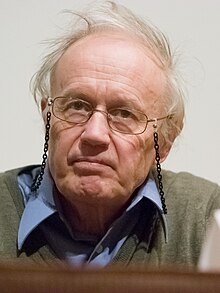
Alexei Abrikosov, Vitaly L. Ginzburg, and Anthony J. Leggett were recognized with the Nobel Prize in Physics for their pioneering work in the theory of superconductors and superfluids. Their contributions have significantly advanced the understanding of quantum physics and material science.
Alexei Abrikosov is known for his theory on the magnetic properties of superconductors and for discoverig the Abrikosov vortex lattice, which explains how magnetic fields can penetrate superconductors. This finding paved the way for developing technologies like magnetic resonance imaging (MRI).
Vitaly L. Ginzburg proposed the Ginzburg-Landau theory, providing a macroscopic framework to describe superconductivity. This theory was instrumental in understanding the behavior of superconductors near their transition temperature, impacting both theoretical research and practical applications.
Anthony J. Leggett made substantial contributions to the theory of superfluidity, particularly the behavior of helium-3. His work helped elucidate the pairing mechanism of superfluid helium-3, which bolstered the comprehension of how superfluids behave at low temperatures.
Together, these scientists’ work has had long-lasting impacts on the field. Their theories not only deepened the understanding of low-temperature physics but also spurred innovations in various domains, including electronic devices and quantum computing.
The influence of their discoveries continues to resonate, informing ongoing research and technological advances. The recognition of their contributions emphasizes the value of theoretical research in driving technological progress and understanding natural phenomena.
#MoofLife #NobelPrize #Physics #Superconductors #Superfluids #QuantumPhysics
Explore the Life Moments of
 AI Twin