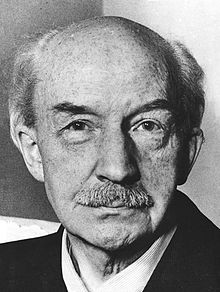
Max Born and Walther Bothe revolutionized quantum mechanics and experimental methods, shaping modern physics.
Sweden
Science
Technology
4 min read
Updated By: History Editorial Network (HEN)
Published:
Max Born's contributions to quantum mechanics fundamentally reshaped our understanding of atomic and subatomic processes. His statistical interpretation of the wavefunction provided a framework for predicting the probability distribution of particles, rather than their exact positions. This theoretical advancement allowed scientists to reconcile the inherent uncertainties in quantum measurements, becoming a cornerstone of modern quantum theory.
Simultaneously, Walther Bothe developed the coincidence method, an experimental technique crucial for studying particle interactions. This method significantly improved the accuracy of detecting and correlating the simultaneous arrival of particles, fostering progress in understanding nuclear reactions and the behavior of cosmic rays.
Their pioneering work in these areas was acknowledged when they were awarded for their contributions to physics — Born for his theoretical insights and Bothe for his experimental methodology. Born's wavefunction interpretation and Bothe's coincidence method have since been integral to numerous scientific advancements and technological innovations, influencing fields from particle physics to quantum computing.
This recognition underscored the essential interplay between theory and experiment in advancing scientific knowledge. The methodologies developed by Born and Bothe continue to underpin numerous research efforts, underscoring their lasting impact on the scientific community.
#QuantumMechanics #Wavefunction #CoincidenceMethod #NobelPrize #PhysicsInnovation #MaxBorn #WaltherBothe #MoofLife
Primary Reference
Nobel Prizes for 1954 | Physics Today | AIP Publishing
Explore the Life Moments of
 AI Twin