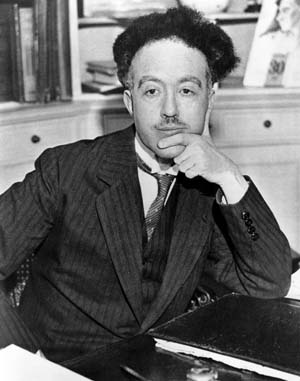
Louis de Broglie's Nobel Prize-winning discovery of electron wave nature revolutionized physics.
Sweden
Science
4 min read
Updated By: History Editorial Network (HEN)
Published:
Louis de Broglie was awarded the Nobel Prize in Physics for his groundbreaking discovery concerning the wave nature of electrons. Born into an aristocratic family, de Broglie initially studied history but eventually shifted his focus to physics. While working on his doctoral thesis, he proposed the revolutionary idea that particles, such as electrons, exhibit wave-like properties, a concept now known as wave-particle duality. This hypothesis extended the ideas of wave-particle duality for light, suggested by Einstein and Planck, into the realm of particle physics.
De Broglie's theoretical insights were initially met with skepticism. However, experimental verification soon followed, most notably through the electron diffraction experiments conducted by Clinton Davisson and Lester Germer, which provided substantial evidence supporting the wave nature of electrons. This work formed the foundation for the development of quantum mechanics, profoundly influencing subsequent research in both theoretical and experimental physics.
The recognition by the Nobel Committee not only validated de Broglie's contributions but also underscored the importance of wave-particle duality in explaining the behavior of particles at atomic and subatomic levels. De Broglie's work has had lasting implications in various fields, from the development of electron microscopy, enabling scientists to view structures at atomic resolutions, to advancements in semiconductor technology.
De Broglie's contribution significantly shaped modern physics and our understanding of the quantum world. The theoretical framework he established continues to inspire more profound explorations into the fundamental nature of matter and energy.
#MoofLife #NobelPrize #Physics #WaveNature #Electrons #QuantumMechanics
Primary Reference
Louis de Broglie – Nobel Lecture - NobelPrize.org
Explore the Life Moments of
 AI Twin