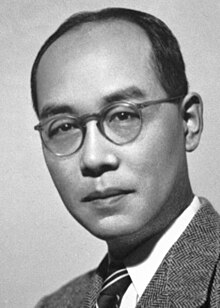
Hideki Yukawa's Nobel Prize-winning work on mesons revolutionized nuclear physics and theoretical physics globally.
Sweden
Science
Global Trade
4 min read
Updated By: History Editorial Network (HEN)
Published:
Hideki Yukawa, a theoretical physicist from Japan, received recognition for his work on the theoretical prediction of mesons and their role in nuclear forces. This work marked a fundamental advancement in the field of particle physics. Yukawa proposed the existence of mesons, particles that mediate the strong interaction between nucleons, which are the components of atomic nuclei. His prediction provided a solution to understanding how atomic nuclei are held together, challenging existing theories and significantly advancing nuclear physics.
Yukawa's theory suggested that mesons were the carriers of the strong force, one of the four fundamental forces in nature, which is responsible for binding protons and neutrons in an atomic nucleus. His hypothesis was later confirmed through experimental findings, validating his theoretical framework and reinforcing the importance of theoretical physics in scientific discovery. Yukawa was the first Japanese scientist to be awarded a Nobel Prize, which highlighted Japan’s burgeoning capabilities in scientific research and influenced subsequent scientific studies and innovations in Japan and worldwide.
The award not only honored Yukawa's individual contributions but also acknowledged the collaborative nature of scientific progress, as his work built on and inspired future research and discoveries in particle physics and related disciplines. The recognition of Yukawa's work underscored the vital role that theoretical physics plays in the larger context of scientific inquiry and understanding the universe's fundamental forces.
#MoofLife #Physics #NobelPrize #HidekiYukawa #Mesons #NuclearForces #ScientificInnovation #ParticlePhysics
Primary Reference
Nobel Prize - "We do not yet know whether the remaining ...
Explore the Life Moments of
 AI Twin