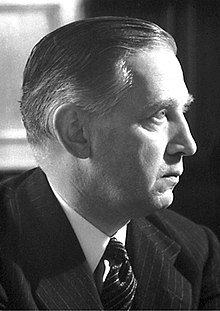
Edward V. Appleton: Nobel laureate pioneering upper atmosphere research revolutionized radio communication.
Sweden
Science
Technology
3 min read
Updated By: History Editorial Network (HEN)
Published:
Edward V. Appleton was recognized by the Nobel Committee in Physics for his pioneering research on the upper atmosphere. His work, which primarily involved probing the ionosphere, led to the identification of a significant layer now known as the Appleton layer or the F2 layer. This layer, situated in the upper atmosphere, plays a critical role in shortwave radio communication by reflecting radio waves back to Earth, thus enabling long-distance communication.
Appleton's experiments utilized radio waves to study the ionosphere's properties, which vary with changes in solar activity and other atmospheric conditions. His findings were vital for understanding how the ionosphere affects radio signal propagation, which was particularly important for improving the reliability of radio communication during both peacetime and wartime.
The identification of the Appleton layer changed the landscape of telecommunication. It provided a foundation for advancements in radar technology and contributed to the design of better navigation and communication systems. Appleton's contributions extended beyond immediate technological applications, influencing the field of atmospheric physics and the broader scientific understanding of Earth's upper atmosphere.
#MoofLife #NobelPrize #Physics #AppletonLayer #Ionosphere #ScientificDiscovery #RadioCommunication
Primary Reference
Edward Victor Appleton - Wikipedia
Explore the Life Moments of
 AI Twin