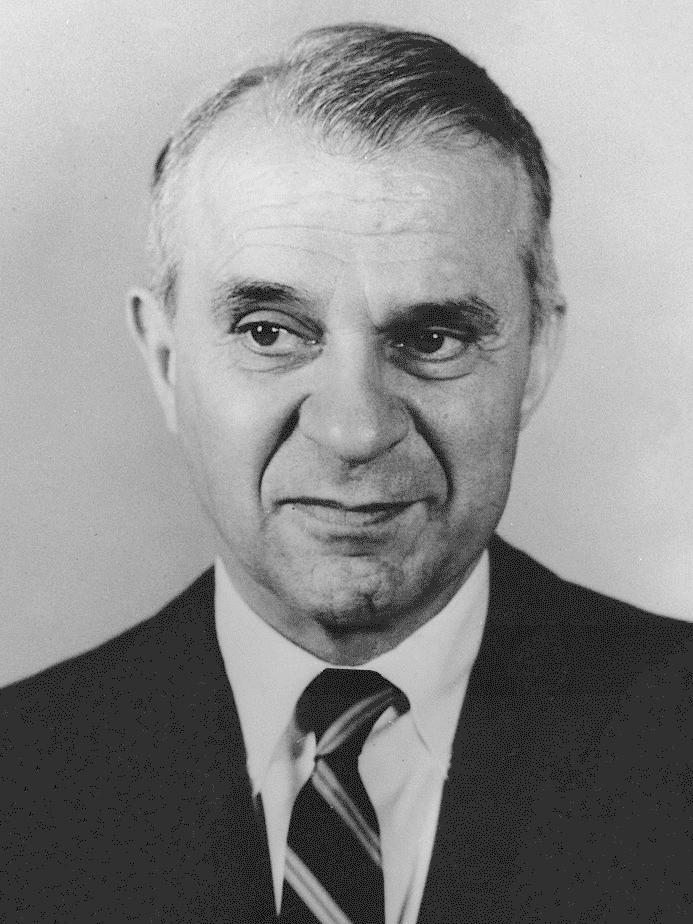
Wassily Leontief's Nobel-winning input-output method revolutionized economic analysis and policymaking with intricate industry linkages.
Sweden
Economic
Science
5 min read
Updated By: History Editorial Network (HEN)
Published:
Wassily Leontief was awarded the Nobel Prize in Economic Sciences for his pioneering work on the input-output method and its application to address crucial economic problems. The input-output method, also known as input-output analysis, is a quantitative economic technique that represents the interdependencies between different sectors of a national economy or different regional economies. Leontief's work provided a systematic and detailed accounting of the production process, illustrating how the output of one industry can become an input for another, hence showing the intricate linkages within an economy.
Leontief’s input-output model became an essential tool for economists and policymakers, offering a detailed understanding of production structures and inter-industry relationships. This model has been instrumental in analyzing the effects of economic shocks, policy changes, and technological advancements on various sectors. By elucidating how industries are interconnected, it has facilitated more accurate economic forecasting and planning.
One of the significant impacts of Leontief’s work can be seen in its application during and after World War II. His methods were employed to assess the potential consequences of different wartime production strategies, helping optimize resource allocation during a critical period. Beyond wartime applications, the input-output method has been used extensively in environmental economics to understand the flow of energy and materials within an economy, contributing to studies on ecological footprints and net environmental impacts.
Another important contribution from Leontief's work is the empirical validation of economic theories. For instance, the Leontief Paradox challenged the prevalent Heckscher-Ohlin theory of international trade by demonstrating that the United States, despite being capital-abundant, was exporting labor-intensive goods and importing capital-intensive ones. This paradox spurred further research into the complexities of trade and factors of production.
The simplicity and clarity of the input-output approach contrast with its powerful analytical capabilities. It lays the foundation for modern computational economic models and continues to influence policy formulation and economic analysis worldwide.
#NobelPrize #Economics #InputOutput #WassilyLeontief #EconomicAnalysis #PolicyMaking #EconomicForecasting #TradeTheory #MoofLife
Primary Reference
Wassily Leontief - Wikipedia

Explore the Life Moments of
 AI Twin