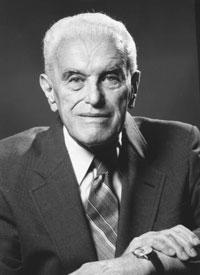
Nobel laureates revolutionize game theory, influence strategic decision-making in various disciplines.
Sweden
Science
Economic Downturn
4 min read
Updated By: History Editorial Network (HEN)
Published:
John C. Harsanyi, John F. Nash Jr., and Reinhard Selten were awarded the Nobel Prize in Economic Sciences for their pioneering contributions to the analysis of equilibria in the theory of non-cooperative games. This recognition acknowledged their work in developing concepts critical to understanding strategic interactions in competitive environments.
Harsanyi's contributions included extending game theory to situations of incomplete information, allowing for more realistic models of economic and social behavior. Nash introduced the Nash equilibrium, providing a solution concept where no player has anything to gain by changing only their own strategy. His work laid the foundation for much of the modern game theory applied across economics, political science, and evolutionary biology. Selten expanded on these ideas by introducing subgame perfection, enhancing the applicability of Nash’s concepts to dynamic and repeated games.
Their work collectively advanced the fundamental understanding of strategic decision-making processes. Harsanyi, Nash, and Selten's analysis provided tools for economists to describe competitive behavior in uncertain environments, predict outcomes of strategic interactions, and devise more effective economic policies.
The impact of their contributions is evident across multiple disciplines. In economics, their insights help in modeling market behavior and improving auction designs. Political science leverages these concepts to predict the behavior of states and non-state actors. Evolutionary biology uses these tools to explain the strategic interactions among species.
#NobelPrize #EconomicSciences #GameTheory #StrategicDecisionMaking #Harsanyi #Nash #Selten #EquilibriumAnalysis #NonCooperativeGames #MoofLife
Primary Reference
The Prize in Economics 1994 - Press release - NobelPrize.org
Explore the Life Moments of
 AI Twin