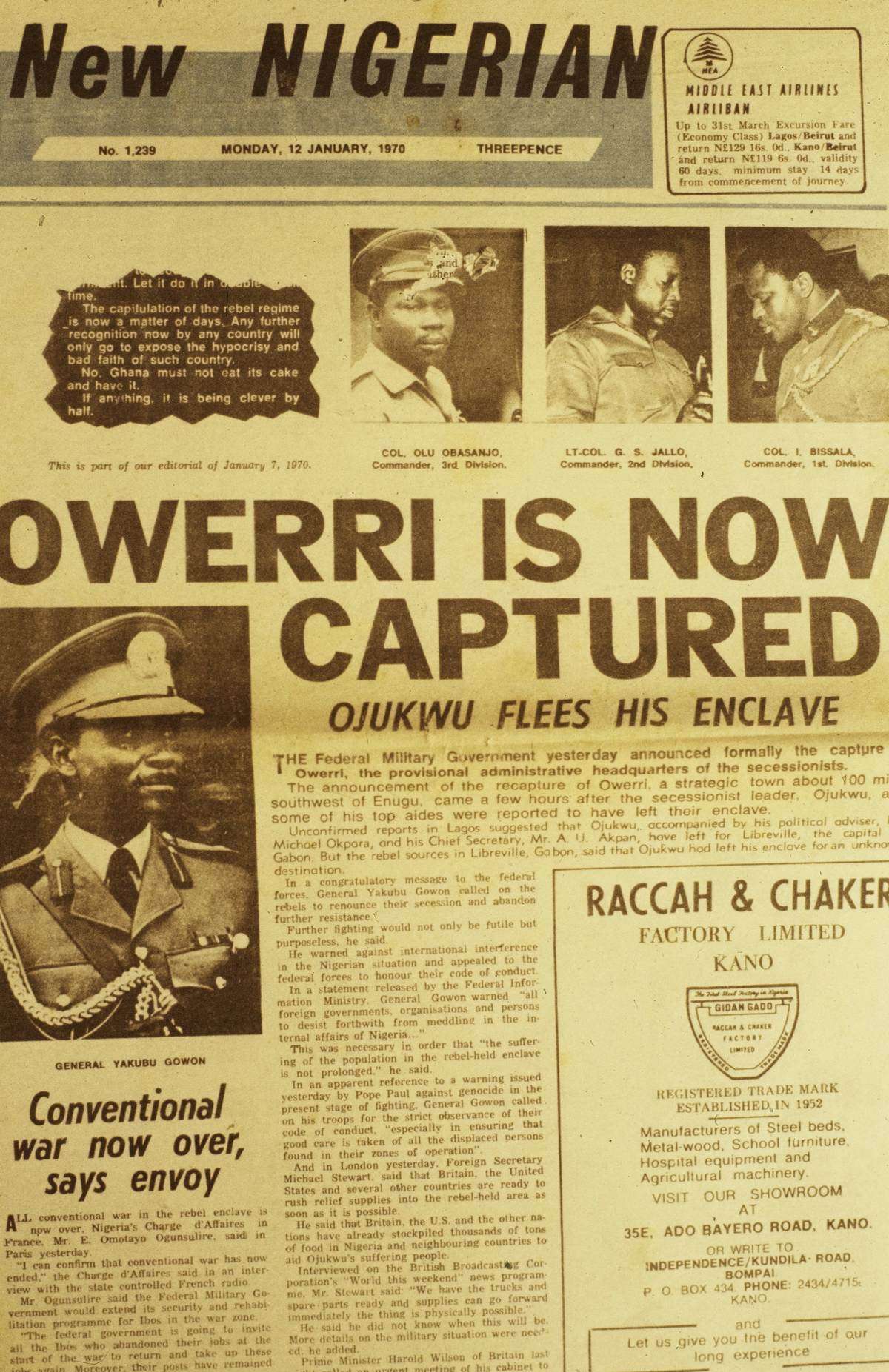
The Nigerian Civil War came to a close with the surrender of Biafra
Political
4 min read
Updated By: History Editorial Network (HEN)
Published:
The Nigerian Civil War came to a close with the surrender of Biafra, led by General Odumegwu Ojukwu. The conflict arose from political, ethnic, and religious tensions that culminated in the secession of the Eastern Region, where the Igbo people dominated, as the Republic of Biafra. The Nigerian government, under General Yakubu Gowon, launched a military campaign to reunify the country, resulting in a brutal three-year war marked by widespread casualties and atrocities.
Biafra, facing a blockade and dwindling resources, eventually capitulated. General Ojukwu fled to Ivory Coast, and his deputy, Philip Effiong, formally surrendered to Nigerian forces. The end of the war brought about the reintegration of Biafra into Nigeria, but the scars of the conflict lingered, with deep-seated ethnic tensions persisting in the post-war era.
The impact of the Nigerian Civil War and the surrender of Biafra was profound. The conflict had resulted in an estimated one to three million deaths, primarily due to famine and disease, making it one of the deadliest civil wars in modern African history. The surrender marked the beginning of a challenging period of reconciliation and reconstruction for the war-torn country. It also underscored the importance of addressing grievances and fostering national unity to prevent future conflicts.
The surrender of Biafra was a pivotal moment in Nigerian history, highlighting the need for political stability, equitable governance, and respect for diversity in a multi-ethnic society. It stands as a reminder of the devastating consequences of civil strife and the imperative of peaceful coexistence.
#EndOfNigerianCivilWar #BiafraSurrender #ReconciliationAndReintegration #NigerianUnity
Primary Reference
Remembering Nigeria's Biafra war that many prefer to forget

Explore the Life Moments of
 AI Twin