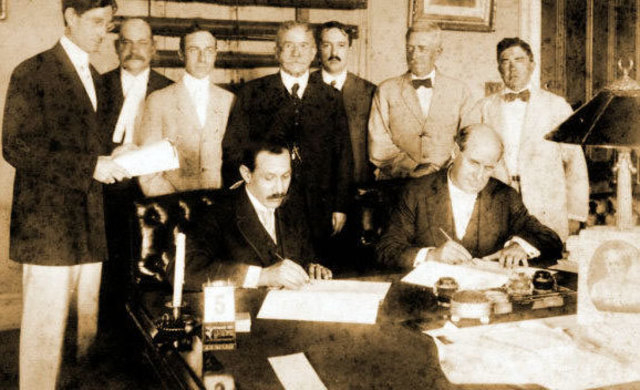
The Bryan-Chamorro Treaty signed
Nicaragua
International Relations
Historical Treaties
Nicaragua
United States
3 min read
Updated By: History Editorial Network (HEN)
Published:
Updated:
The Bryan-Chamorro Treaty, signed in 1916 between the United States and Nicaragua, was a pivotal agreement that significantly influenced U.S.-Nicaragua relations. This treaty granted the U.S. exclusive rights to construct a canal through Nicaragua, a strategic move aimed at enhancing American influence in Central America. Additionally, it allowed the U.S. to establish naval bases in the Gulf of Fonseca, further solidifying its military presence in the region. The treaty was part of a broader U.S. strategy to secure its interests and counteract foreign influence in Central America. However, the Bryan-Chamorro Treaty faced considerable opposition from other Central American nations, who viewed it as an infringement on their sovereignty. Within Nicaragua, the treaty sparked controversy and dissent, leading to a complex political landscape. The agreement was ultimately abrogated in 1970, but its signing marked a critical moment in the history of U.S.-Nicaragua relations, reflecting the broader themes of American interventionism and geopolitical strategy in the early 20th century.

Explore the Life Moments of
 AI Twin