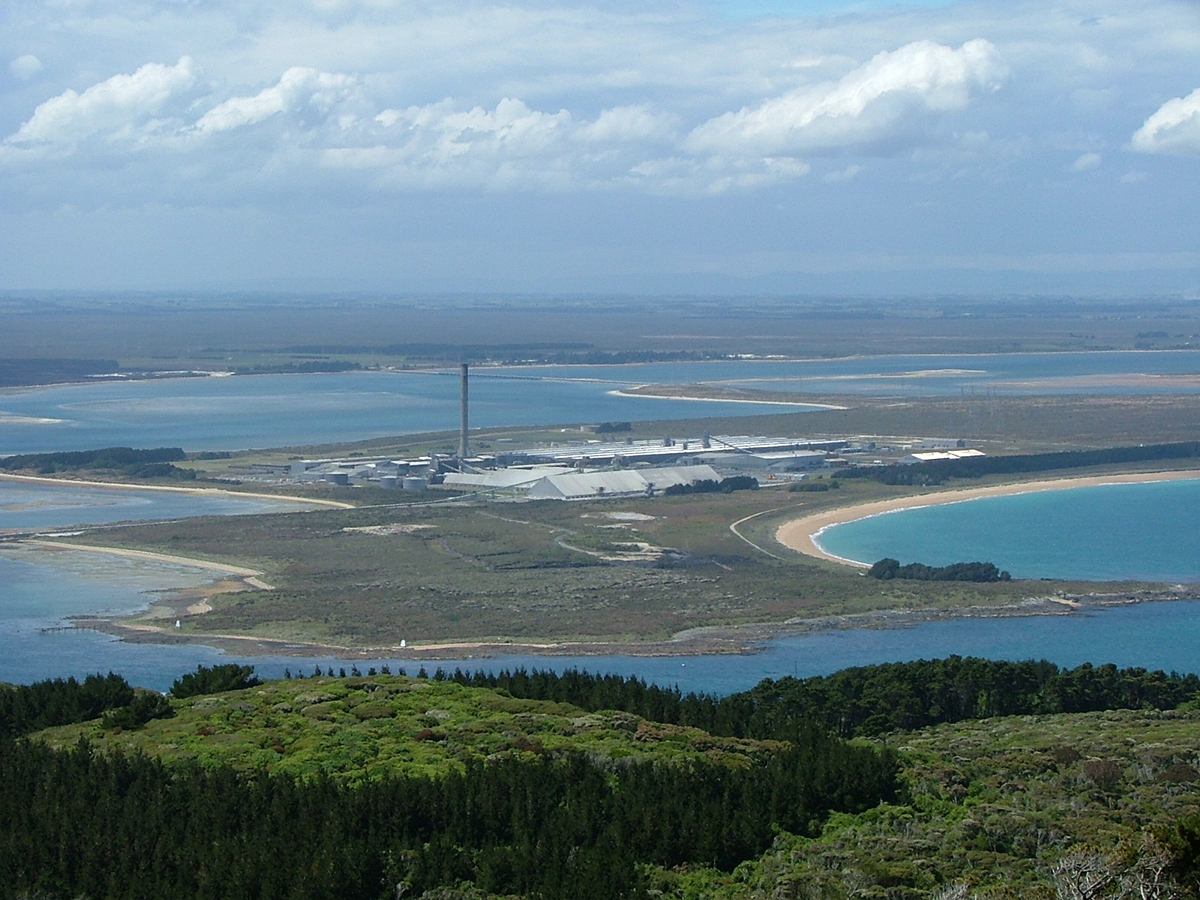
Tiwai Point smelter resumes operations after shutdown.
New Zealand
Economic Development
Environmental Impact
3 min read
Updated By: History Editorial Network (HEN)
Published:
Established in 1971, the Tiwai Point aluminium smelter marked a pivotal moment in New Zealand's industrial landscape. Situated near Bluff, the smelter was a joint venture between the New Zealand government and multinational mining company, Comalco.
The smelter played a vital role in the local economy, providing jobs for thousands of workers and fostering economic growth in the Southland region. Its operations were powered by the nearby Manapouri hydroelectric power station, which was built to meet the smelter's high energy demands.
With its advanced technology and efficient production processes, the Tiwai Point smelter quickly became one of the largest aluminium smelters in the Southern Hemisphere. Its output contributed significantly to New Zealand's exports, bolstering the country's international trade and economy.
Despite its economic benefits, the smelter also faced criticism for its environmental impact, particularly concerning energy consumption and greenhouse gas emissions. Efforts were made over the years to address these concerns and improve the smelter's sustainability practices.
Over the decades, the Tiwai Point aluminium smelter has continued to operate, adapting to changing markets and regulatory environments. Its significance in New Zealand's industrial history remains undeniable, leaving a lasting impact on the country's economy and trade relationships.
#TiwaiPoint #AluminiumSmelter #NewZealandEconomy #IndustrialDevelopment #EnvironmentalImpact

Explore the Life Moments of
 AI Twin