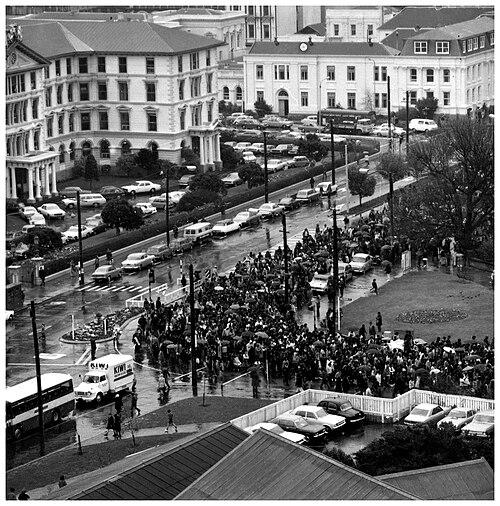
Māori land march leaves Te Hāpua
New Zealand
Political
3 min read
Updated By: History Editorial Network (HEN)
Published:
Updated:
In the 1975 Māori land march, thousands of protestors from different tribes came together to voice their concerns over the loss of their land to the government. The march began in Northland and traveled over 1,000 kilometers to Te Hāpua, a small town in the far north of New Zealand.
The protestors were led by Dame Whina Cooper, a respected Māori elder who spoke passionately about the need to protect their ancestral lands. Along the way, they were joined by supporters from all walks of life, including non-Māori New Zealanders who sympathized with their cause.
When the march reached Te Hāpua, it marked a turning point in the history of Māori land rights. The event attracted significant media attention and sparked national discussions about the injustices faced by the Māori people. The protestors' demands for land reform and recognition of their rights gained momentum, eventually leading to policy changes that addressed some of their concerns.
Despite facing opposition and criticism, the protestors remained steadfast in their mission to protect Māori land for future generations. The Māori land march at Te Hāpua served as a powerful reminder of the ongoing struggle for indigenous rights in New Zealand and inspired others to join the fight for justice and equality.
#MāoriLandMarch #TeHāpuaProtest #LandRights #IndigenousRights #NewZealandHistory

Explore the Life Moments of
 AI Twin