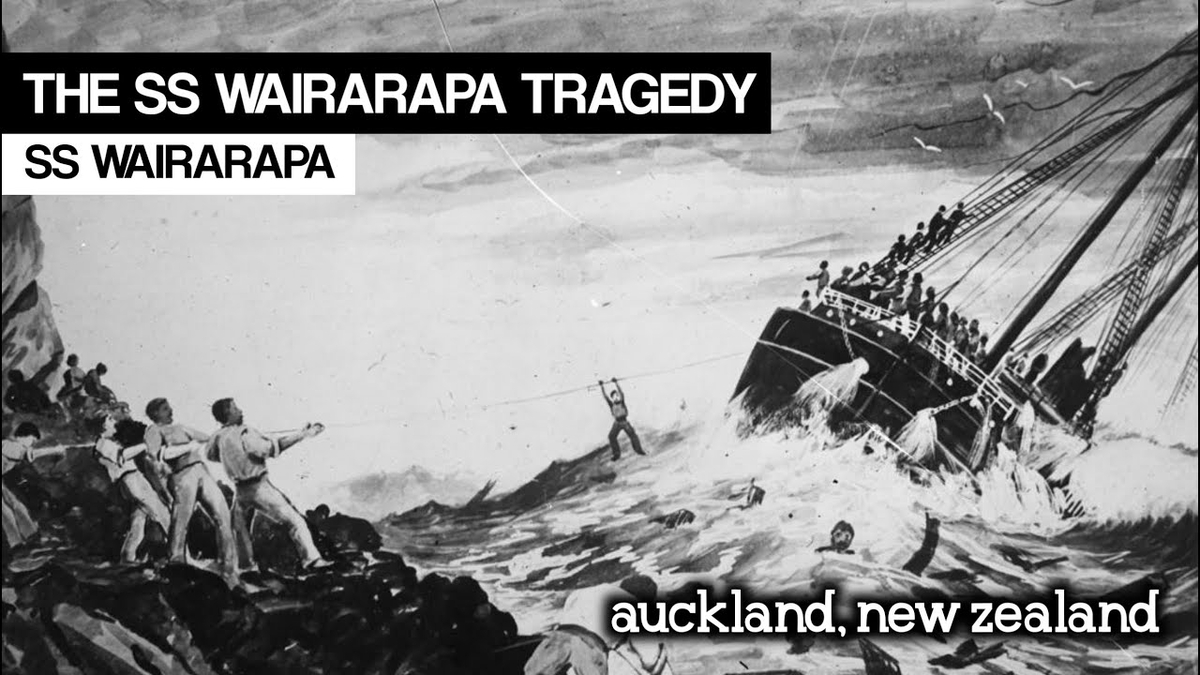
Marine tragedy: SS Wairarapa shipwreck off Great Barrier Island.
New Zealand
Tragedy
4 min read
Updated By: History Editorial Network (HEN)
Published:
Updated:
The SS Wairarapa, a steamship operated by the Union Steam Ship Company of New Zealand, was on a voyage from Sydney, Australia to Auckland, New Zealand when tragedy struck. In the early hours of the morning, the ship ran aground on the northern tip of Great Barrier Island, a treacherous area known for its dangerous currents and reefs. Despite efforts to free the vessel, it succumbed to the rough seas and broke apart, leading to the loss of over 130 lives.
The Wairarapa disaster had a profound impact on New Zealand, marking one of the deadliest maritime tragedies in the country's history. The victims included men, women, and children from diverse backgrounds, all coming together in the face of a sudden and catastrophic event. The news of the wreck spread quickly, prompting a nationwide outpouring of grief and support for the families affected by the tragedy.
In the aftermath of the disaster, investigations were launched to determine the cause of the wreck and to prevent similar incidents in the future. It was found that a combination of navigational errors, rough weather conditions, and the challenging coastline contributed to the ship's demise. Safety protocols for maritime travel were subsequently improved, including better mapping of sea routes and increased emergency preparedness measures.
The wreck of the SS Wairarapa remains a somber reminder of the perils of sea travel and the fragility of human life in the face of nature's forces. The loss of so many lives in a single event left a lasting impact on the collective memory of New Zealanders, who honor the memory of the victims through memorials and commemorations to this day.
#SSWairarapa #MaritimeTragedy #NewZealandHistory #Memorialization
Explore the Life Moments of
 AI Twin