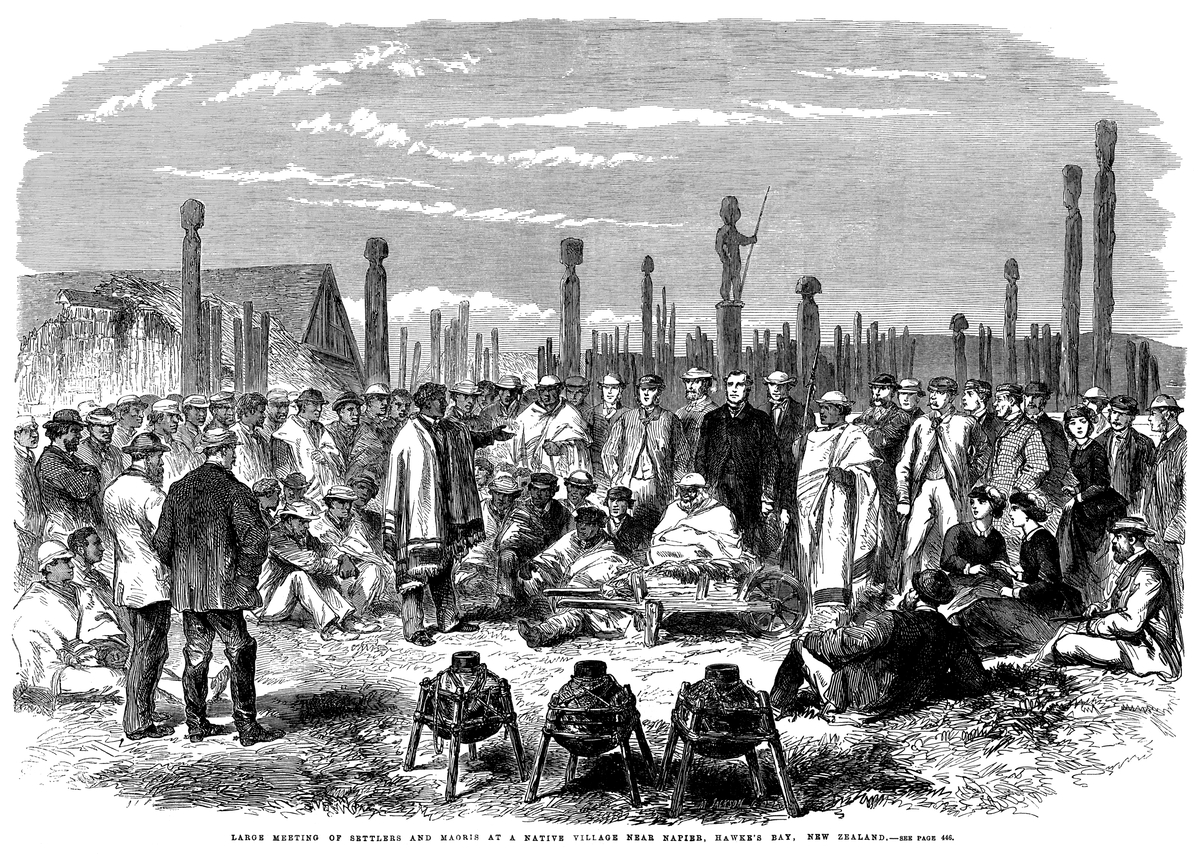
Land-confiscation through New Zealand Settlements Act.
New Zealand
Political
Social
4 min read
Updated By: History Editorial Network (HEN)
Published:
The New Zealand Settlements Act was passed, allowing the confiscation of land from Maori tribes who were deemed to have rebelled against British authority. This act was a significant turning point in New Zealand's history, impacting the relationships between the Maori people and the British colonial government.
Prior to the passing of this act, tensions had been escalating between the Maori tribes and the colonial government over issues such as land ownership and sovereignty. The British sought to assert their authority and expand their settlements, often at the expense of Maori land rights. In response, some Maori tribes resisted, leading to conflicts that ultimately resulted in the passing of the New Zealand Settlements Act.
The act empowered the government to confiscate land from those tribes deemed to have engaged in rebellion, with the confiscated land being redistributed to settlers. This policy not only undermined Maori land rights but also had lasting economic, social, and cultural impacts on the Maori communities affected.
The confiscations resulted in the displacement of many Maori from their ancestral lands, leading to profound social and economic disruption within their communities. Additionally, the loss of land had significant cultural implications, as land held spiritual and historical significance for the Maori people.
Overall, the passing of the New Zealand Settlements Act marked a dark chapter in New Zealand's history, highlighting the injustices faced by the Maori people in their interactions with the colonial government. The effects of this act continue to be felt today, shaping the ongoing efforts towards reconciliation and land rights for the Maori people.
#NewZealandHistory #MaoriRights #ColonialInjustice
Primary Reference
Land confiscation law passed | NZ History

Explore the Life Moments of
 AI Twin