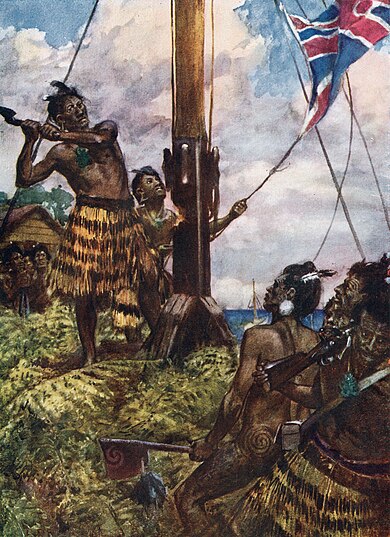
Hone Heke ignites Flagstaff War
New Zealand
Colonialism
4 min read
Updated By: History Editorial Network (HEN)
Published:
Updated:
Hone Heke, a prominent Māori chief in New Zealand, initiated the conflict known as the Flagstaff War. The war was sparked by Heke's frustrations with the increasing British presence in the Bay of Islands and the imposition of British authority over Māori land.
The British had raised a flagstaff on Maiki Hill, which was a symbol of their sovereignty. Heke saw this as a direct challenge to Māori authority and a violation of the Treaty of Waitangi. In response, Heke and his followers took matters into their own hands and chopped down the flagstaff multiple times, symbolizing their resistance to British rule.
The actions of Heke led to a series of conflicts between the Māori and the British forces. These skirmishes were characterized by guerilla tactics and ambushes, with both sides suffering casualties. The British eventually retaliated by attacking Heke's stronghold at Puketutu Pa. Despite the British victory, Heke's defiance resonated with other Māori tribes, leading to continued resistance against British colonization.
The Flagstaff War had far-reaching consequences for both the Māori and the British. It highlighted the deep-seated tensions between the indigenous population and the colonial authorities. The war also exposed the inadequacies of the Treaty of Waitangi in protecting Māori rights and land.
Overall, the Flagstaff War was a turning point in New Zealand's history, marking the beginning of prolonged conflicts over land, sovereignty, and autonomy for the Māori people. It served as a reminder of the enduring struggles faced by indigenous peoples in the face of colonial expansion.
#FlagstaffWar #HoneHeke #MāoriResistance #BritishColonization #TreatyofWaitangi #NewZealandHistory
Primary Reference
The Northern War | NZ History
Explore the Life Moments of
 AI Twin