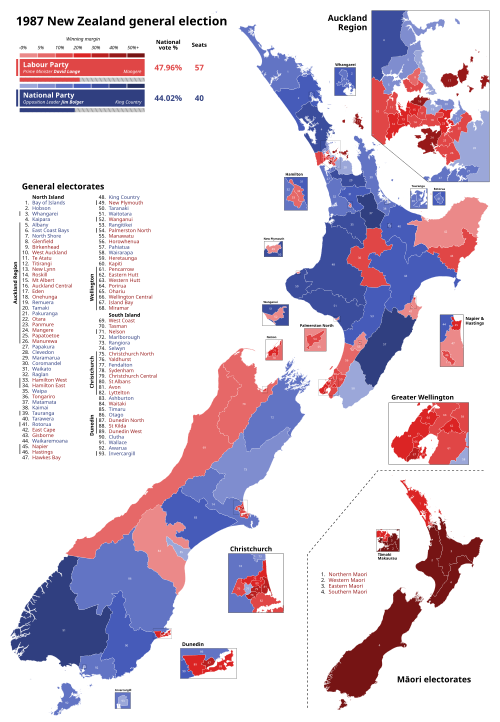
General election: Labour party achieves re-election.
New Zealand
Political
4 min read
Updated By: History Editorial Network (HEN)
Published:
Updated:
In the general election of 8/15/1987, the Labour Party in New Zealand won a resounding victory, securing a second consecutive term in office. The Prime Minister, David Lange, led his party to success against the opposition National Party. Labour's re-election was attributed to their progressive policies and successful management of the economy during their first term.
The Labour government's focus on social welfare programs, nuclear-free stance, and efforts to address economic inequality resonated with the New Zealand electorate. Their commitment to promoting Maori rights and advancing women's equality also garnered support from diverse groups within the population.
The impact of Labour's re-election was significant both domestically and internationally. It solidified New Zealand's stance as a nuclear-free nation and strengthened its position as a global advocate for disarmament. The continued leadership of David Lange was seen as a continuation of the country's progressive agenda and commitment to social justice.
Following the election, Labour implemented further reforms in areas such as education, healthcare, and labor rights. Their policies aimed to create a fairer and more inclusive society, prioritizing the well-being of all New Zealanders.
Overall, the re-election of the Labour Party in 8/15/1987 demonstrated the continued support for their agenda of social reform and economic prosperity. It signaled a mandate from the electorate to further pursue policies that would benefit the country as a whole.
#LabourParty #NewZealand #ProgressivePolicies #SocialReform #EconomicProsperity #NuclearFree
Explore the Life Moments of
 AI Twin