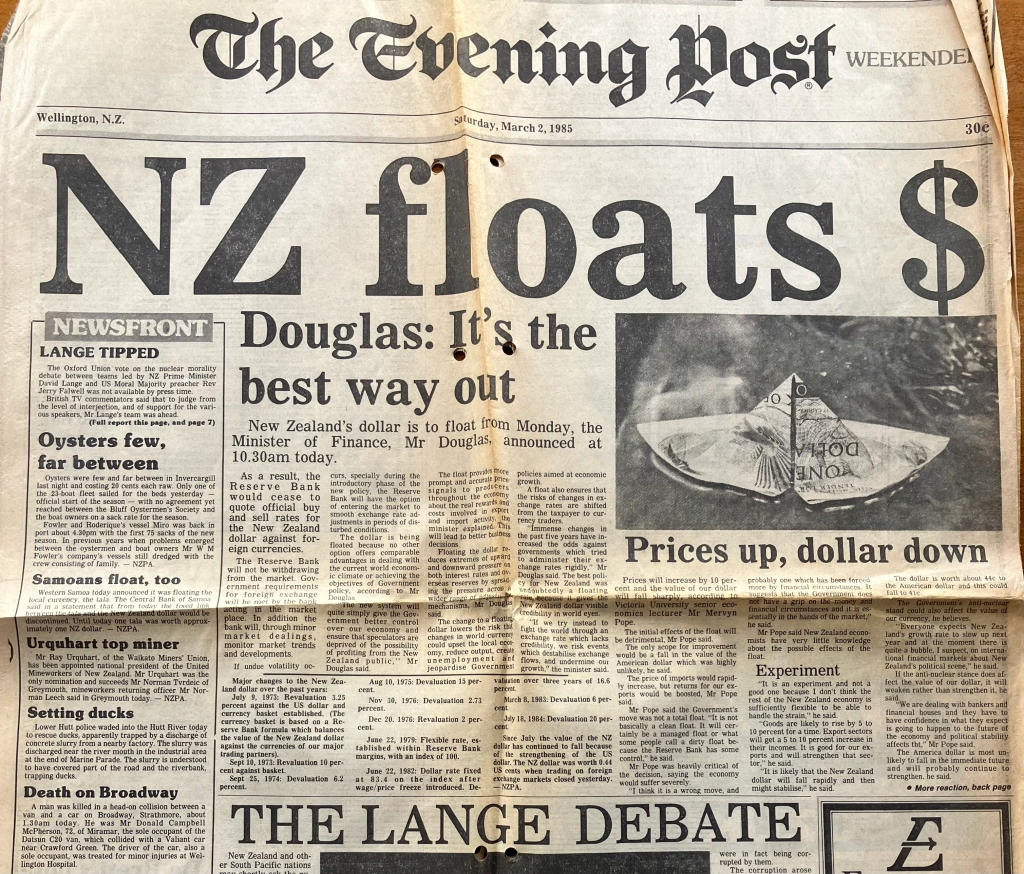
Currency float in New Zealand.
New Zealand
Economic Reform
New Zealand
4 min read
Updated By: History Editorial Network (HEN)
Published:
Updated:
In March 1985, New Zealand made a pivotal decision to float its currency, the New Zealand dollar. Prior to this historic move, the country operated under a fixed exchange rate system where its currency value was tied to a basket of international currencies. The shift to a floating exchange rate meant that the value of the New Zealand dollar would be determined by market forces of supply and demand.
The decision to float the New Zealand dollar had far-reaching impacts on the country's economy. It increased the flexibility of the exchange rate, allowing it to adjust to market conditions and external shocks. This move helped to improve the country's competitiveness in international trade and boosted export-led growth. It also provided more stability in the face of economic uncertainties and reduced the need for frequent government interventions in the foreign exchange market.
The floating of the New Zealand dollar signaled a new era of economic reform in the country. It was part of a broader set of policies aimed at deregulating and liberalizing the economy. This shift towards market-oriented reforms set the stage for increased economic growth and prosperity in New Zealand in the following years.
Overall, the decision to float the New Zealand dollar in March 1985 was a significant turning point in the country's economic history. It marked a departure from the traditional fixed exchange rate system and paved the way for a more open and competitive economy that was better equipped to adapt to changing global conditions.
#NewZealand #CurrencyFloat #EconomicReform
Primary Reference
Forty years of floating

Explore the Life Moments of
 AI Twin