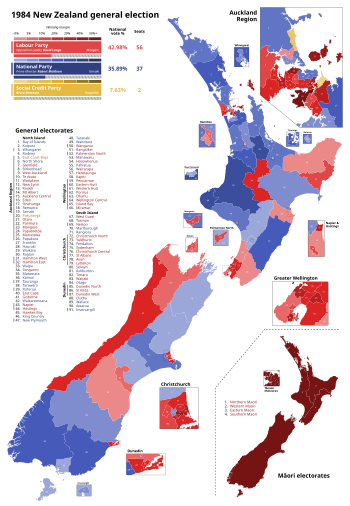
Constitutional Crisis: Muldoon rejects Lange's advice.
New Zealand
Political
4 min read
Updated By: History Editorial Network (HEN)
Published:
Updated:
After a contentious general election in New Zealand in 1984, Prime Minister Robert Muldoon faced defeat at the hands of David Lange. However, the transition of power was marred by a constitutional crisis when Muldoon refused to adhere to Lange's advice to retire as recommended by the Governor-General. Muldoon's defiance led to a deadlock, with two parallel administrations operating, causing uncertainty and confusion among the public and government officials.
The impasse lasted for several days, creating a political stalemate and raising concerns over the stability of the government. Eventually, pressure from within Muldoon's own party and the threat of a vote of no confidence forced him to relent. He begrudgingly accepted the Governor-General's advice and stepped down, allowing Lange to assume the position of Prime Minister.
This event highlighted the importance of constitutional conventions and the peaceful transfer of power in a democratic system. It showcased the resilience of New Zealand's political institutions in resolving a challenging situation through adherence to democratic principles and established protocols. The crisis also underscored the significance of respecting the outcome of democratic elections and upholding the rule of law in a civilized society.
The episode left a lasting impact on New Zealand's political landscape, serving as a cautionary tale against attempts to circumvent established norms and procedures during times of political transition. It reinforced the notion that no individual, regardless of their position or authority, is above the law and that the will of the people must always prevail in a democratic society.
#NewZealandPolitics #ConstitutionalCrisis #PowerTransition #DemocraticPrinciples
Explore the Life Moments of
 AI Twin