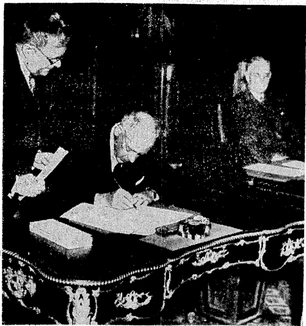
Co-operation Agreement in the South Pacific
New Zealand
Political
Cooperation
4 min read
Updated By: History Editorial Network (HEN)
Published:
Updated:
During the 1940s, amidst the turmoil of World War II, Australia and New Zealand forged an agreement to strengthen their collaboration in the South Pacific region. This strategic move aimed to enhance their mutual defense and advance their shared interests in the Pacific Islands. The treaty cemented a longstanding relationship based on common values and geographical proximity.
The Australia-New Zealand Agreement marked a milestone in their diplomatic history, laying the groundwork for future joint initiatives in the region. By pooling their resources and expertise, both countries aimed to promote stability and economic development in the South Pacific. This partnership enabled them to address common challenges such as security threats, natural disasters, and infrastructural needs more effectively.
The agreement fostered closer ties between Australia and New Zealand, establishing a framework for coordinated action and information sharing. It facilitated a more cohesive approach to regional issues, allowing both nations to leverage their respective strengths for the benefit of the Pacific community. Through this collaboration, they sought to uphold peace and prosperity in the region while respecting the sovereignty of Pacific Island nations.
The Australia-New Zealand Agreement resonated beyond the immediate geopolitical context, reflecting a broader commitment to cooperation and solidarity in the South Pacific. It highlighted the importance of strategic partnerships in addressing complex regional dynamics and ensuring the well-being of all stakeholders. The legacy of this agreement endures in ongoing joint efforts to support the South Pacific's development and security.
#Australia #NewZealand #SouthPacific #Cooperation #Diplomacy #Partnership #RegionalSecurity #PacificIslands
Explore the Life Moments of
 AI Twin