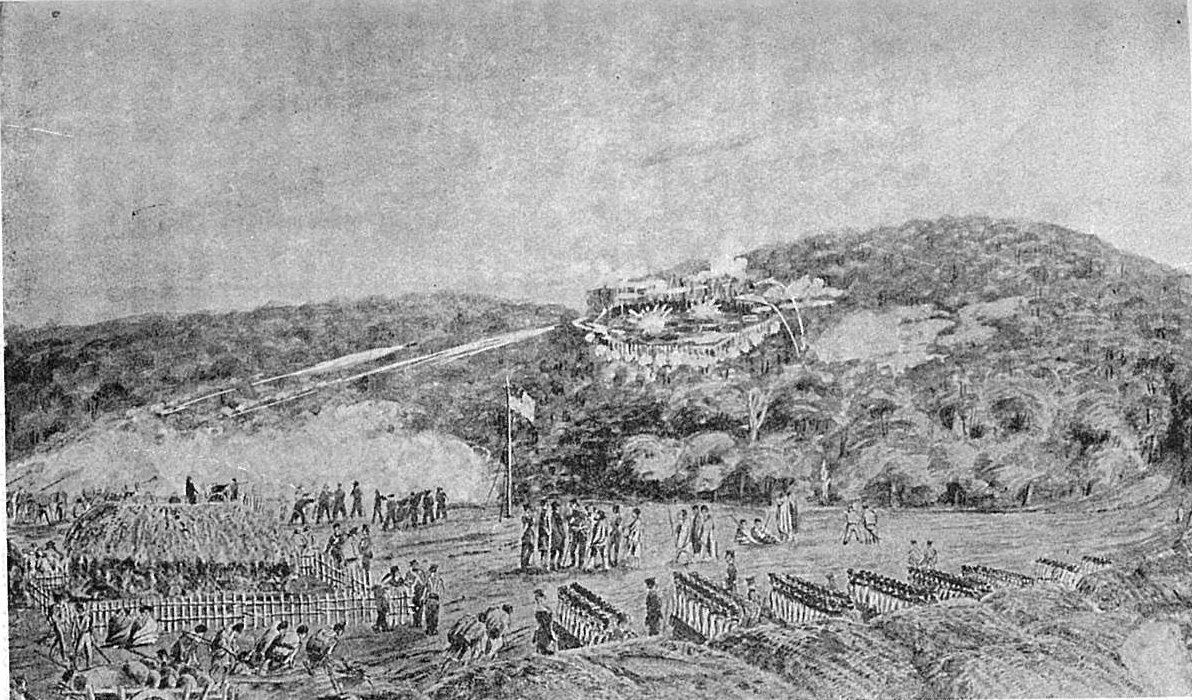
Capture of Ruapekapeka: Flagstaff War Outcome
New Zealand
Colonization
4 min read
Updated By: History Editorial Network (HEN)
Published:
Updated:
The Flagstaff War with the capture of Ruapekapeka was a significant conflict that took place during the early colonization of New Zealand by the British. The war originated from tensions between the British settlers and the Māori tribes, particularly the Ngāpuhi clan. The British sought to establish control over the region, leading to clashes with the Māori who vigorously defended their lands and sovereignty.
Ruapekapeka, a fortified pā (traditional Māori village) strategically located on a hill, became a focal point of the conflict. The Māori chief Te Ruki Kawiti, known for his military prowess, designed the pā with intricate trenches and palisades, making it a formidable stronghold. The British forces, under the command of Colonel William Hulme, faced a daunting task in trying to breach the defences of Ruapekapeka.
After several weeks of intense fighting and bombardment, the British eventually managed to capture Ruapekapeka. The stronghold was significantly damaged, and Te Ruki Kawiti along with his warriors retreated into the surrounding forests. The fall of Ruapekapeka marked a turning point in the Flagstaff War, signaling a temporary victory for the British forces.
The capture of Ruapekapeka had a lasting impact on the dynamics between the British settlers and the Māori tribes. While the British celebrated their military success, the Māori continued to resist colonization efforts, leading to further conflicts and disputes in the years to come. The war highlighted the resilience and tactical ingenuity of the Māori warriors, as well as the challenges faced by the British in asserting their authority over the indigenous population.
#FlagstaffWar #Ruapekapeka #Colonization #MāoriResistance #BritishSettlers
Primary Reference
Flagstaff War - Wikipedia

Explore the Life Moments of
 AI Twin