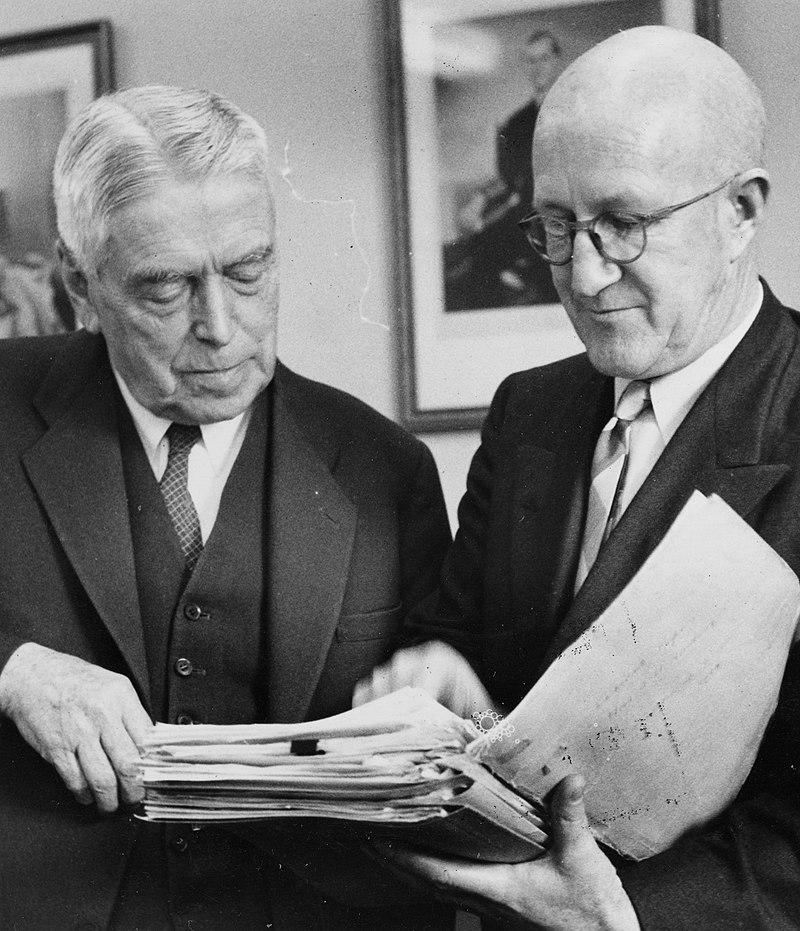
Arnold Nordmeyer's "Black Budget."
New Zealand
8 min read
Updated By: History Editorial Network (HEN)
Published:
Updated:
In 1958, New Zealand's Finance Minister Arnold Nordmeyer introduced a controversial and highly impactful financial policy known as the "Black Budget." This budget was a response to economic challenges and aimed at stabilizing the national economy through significant tax increases and spending cuts. The measures were widely unpopular and had far-reaching political and social consequences.
Background: Economic Challenges
In the late 1950s, New Zealand faced significant economic difficulties, including a rising balance of payments deficit and inflationary pressures. The country was heavily reliant on agricultural exports, particularly to the United Kingdom, and fluctuations in global markets had a profound impact on the domestic economy. The government, led by Prime Minister Walter Nash and the Labour Party, sought to address these issues through fiscal policy.
Arnold Nordmeyer: The Architect of the Budget
Arnold Nordmeyer, the Minister of Finance, was tasked with crafting a budget that would address the economic problems. Nordmeyer was a seasoned politician with a reputation for his strong principles and fiscal prudence. He believed that tough measures were necessary to stabilize the economy and prevent further financial deterioration.
The Black Budget: Key Measures
The 1958 Budget, which came to be known as the "Black Budget," included several controversial measures aimed at increasing government revenue and curbing inflation:
Tax Increases: The budget introduced substantial increases in taxes on goods such as beer, spirits, tobacco, and petrol. These "sin taxes" were highly visible and affected a large portion of the population, leading to widespread discontent.
Income Tax: There were also increases in income tax, particularly targeting higher income brackets. This move was intended to address income inequality but was met with resistance from those affected.
Spending Cuts: Nordmeyer implemented cuts in government spending, including reductions in subsidies for farmers and cuts to social services. These measures were aimed at reducing the fiscal deficit but were unpopular among beneficiaries.
Tight Monetary Policy: The budget included measures to tighten monetary policy, such as raising interest rates, to combat inflation and stabilize the currency.
Public Reaction and Political Fallout
The Black Budget was met with immediate and widespread opposition. Many New Zealanders were angered by the increased cost of living due to higher taxes on everyday goods. The budget's unpopularity was reflected in public protests and a significant decline in support for the Labour Party.
Impact on the Labour Party
The political fallout from the Black Budget was severe for the Labour Party. The budget's unpopularity contributed to Labour's defeat in the 1960 general election, as voters turned to the National Party, led by Keith Holyoake, which promised a more balanced approach to economic management.
Economic Outcomes
While the Black Budget was highly controversial and politically damaging, it did have some positive economic outcomes. The measures helped to stabilize the balance of payments and reduce inflationary pressures. However, the social and political costs were significant, and the budget remains a contentious chapter in New Zealand's economic history.
Legacy
The term "Black Budget" has become synonymous with harsh fiscal measures and political risk. Arnold Nordmeyer's reputation was heavily affected, and the budget overshadowed much of his political career. Despite its controversial nature, the Black Budget is often studied as an example of the difficult choices governments must sometimes make to address economic challenges.
#MomentsOfLife #MoofLife_Moment #MoofLife #BlackBudget #ArnoldNordmeyer #NewZealandHistory #EconomicPolicy #PoliticalHistory #LabourParty #FiscalPolicy
Explore the Life Moments of
 AI Twin