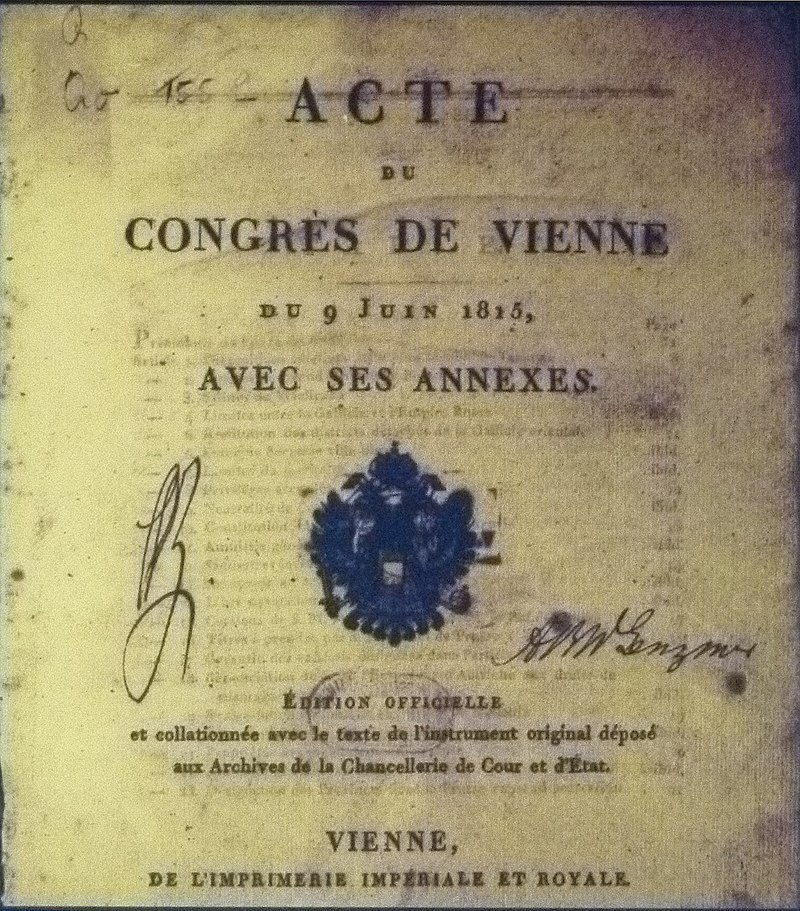
Creation of United Kingdom of Netherlands ends French control via Congress of Vienna.
Netherlands

Political
4 min read
Updated By: History Editorial Network (HEN)
Published:
In the aftermath of the Napoleonic Wars, the Congress of Vienna convened to reorganize Europe and restore stability. One significant outcome was the formation of the United Kingdom of the Netherlands, which marked the end of French control over the region. This new state comprised present-day Netherlands, Belgium, and Luxembourg, uniting them under a single monarchy.
The Congress aimed to create a buffer state between France and Germany, ensuring peace and balance of power in the region. By merging the Dutch Republic with the Southern Netherlands, which had been under French rule, the United Kingdom of the Netherlands was established. The Dutch Prince William of Orange was appointed as the new monarch, leading to the unification of the territories.
The United Kingdom of the Netherlands brought economic benefits, facilitating trade and commerce between the provinces. However, the merger also faced challenges due to cultural and religious differences between the predominantly Catholic South and the Protestant North. Tensions eventually led to the Belgian Revolution in 1830, resulting in the secession of Belgium from the union.
Despite its eventual dissolution, the United Kingdom of the Netherlands played a crucial role in European politics during the post-Napoleonic era. It served as a model for territorial reorganization and diplomatic efforts to maintain peace on the continent.
The Congress of Vienna's decision to create the United Kingdom of the Netherlands reshaped the political map of Europe and contributed to the restoration of stability after years of conflict. This event underscores the importance of diplomacy and cooperation in shaping the future of nations and regions. #CongressofVienna #UnitedKingdomoftheNetherlands #EuropeanDiplomacy
Primary Reference
Napoleonic Wars - Wikipedia
Explore the Life Moments of
 AI Twin