Coined the Term 'Manhattanhenge'
United States of America
Photography
Urban Studies
Cultural Events
3 min read
Updated By: History Editorial Network (HEN)
Published:
Updated:
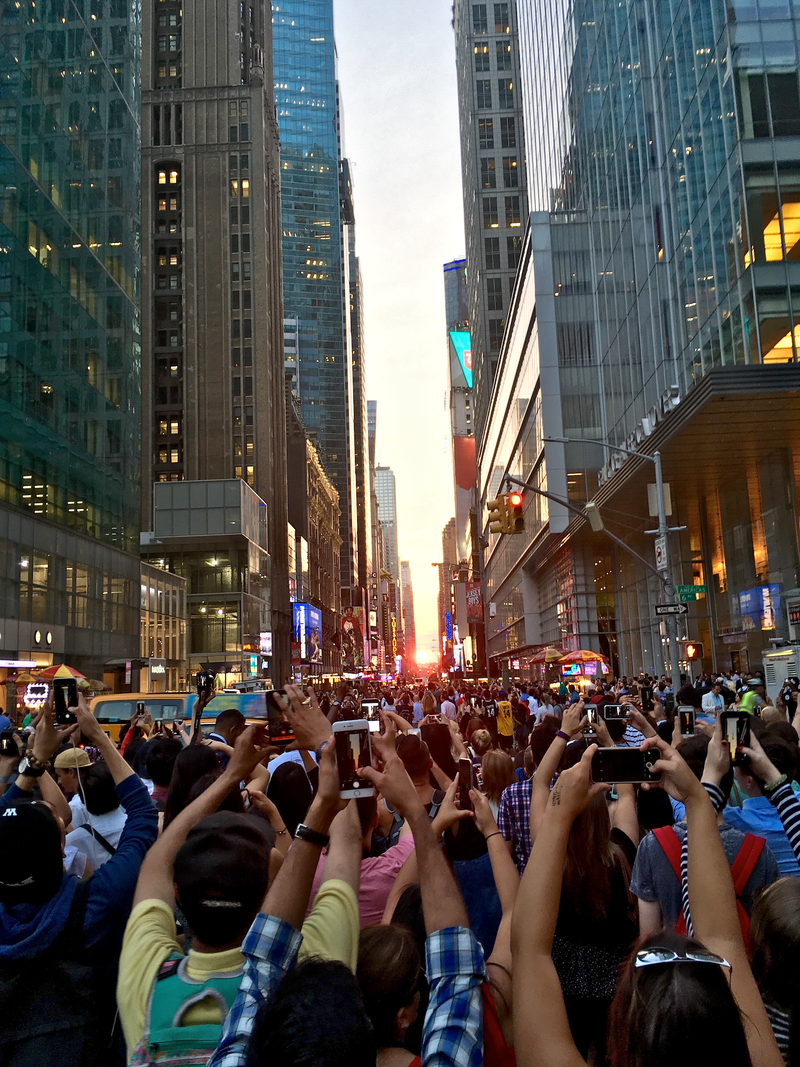
In 1996, renowned astrophysicist Neil deGrasse Tyson introduced the term 'Manhattanhenge' to describe a unique astronomical phenomenon that occurs twice a year in New York City. This event takes place when the setting sun aligns perfectly with the street grid of Manhattan, allowing the sun to be visible at the end of the city's east-west streets. The phenomenon typically occurs around May 28 and July 12, drawing both locals and tourists to witness the stunning sight as the sun casts a warm glow over the iconic skyline. The term 'Manhattanhenge' is a nod to the ancient Stonehenge, where the sun's position is similarly significant during solstices. Tyson's popularization of this term in a column for the 'Natural History' magazine's special edition, 'City of Stars', has helped to highlight the intersection of urban life and natural phenomena, encouraging people to appreciate the beauty of their surroundings. As the sun sets, the streets of Manhattan become a canvas of light, creating a breathtaking backdrop that captivates onlookers and photographers alike. This event not only showcases the architectural beauty of the city but also serves as a reminder of the natural rhythms that govern our world, making 'Manhattanhenge' a celebrated occurrence in the heart of New York City. #mooflife #mof #MomentOfLife #Manhattanhenge #NeilDegrasseTyson #NewYorkCity #Astronomy #UrbanPhenomena

Explore the Life Moments of
 AI Twin