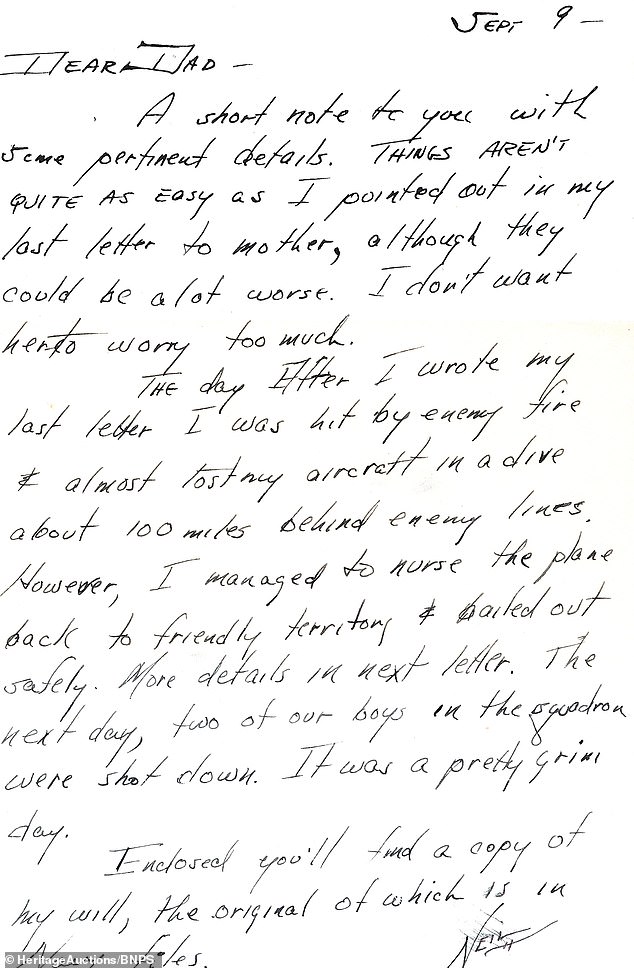
Neil Armstrong’s September 9, 1951, Letter to His Father – A Moment of Survival in the Korean War
United States of America
War
7 min read
Updated By: History Editorial Network (HEN)
Published:
On September 9, 1951, Neil Armstrong, a 21-year-old U.S. Navy pilot, wrote an emotional and matter-of-fact letter to his father, Stephen Koenig Armstrong, recounting a near-death experience during the Korean War. In this letter, Armstrong describes how his F9F Panther jet was hit by enemy fire, forcing him into a desperate situation behind enemy lines. This moment reflects not only the dangers of war but also Armstrong’s characteristic calmness under pressure, a quality that would later define him as an astronaut and the first man to walk on the Moon.
The Incident: Shot Down Over Korea
In the letter, Armstrong explains that he had written to his mother just a day earlier, reassuring her about his situation. However, reality quickly changed when he was hit by enemy anti-aircraft fire during a combat mission deep 100 miles behind enemy lines.
His aircraft went into a dangerous dive, putting him at risk of crashing.
Despite the damage, Armstrong nursed the plane back toward friendly territory as long as he could.
Eventually, he was forced to eject and parachute to safety in a dramatic escape.
Armstrong landed safely and made it back to friendly forces. His letter to his father, written just a few days after the incident, carries an almost understated tone, despite the gravity of what had happened. He even reassures his father, writing:
“I don’t want you to worry too much.”
This calm demeanor under extreme pressure foreshadowed the cool-headed astronaut he would later become.
A Grim Reality: The Cost of War
Armstrong also shares a somber update:
“The next day, two of our boys in the squadron were shot down. It was a pretty grim day.”
This brief yet powerful statement reflects the harsh reality of war—the loss of fellow pilots and friends. The Korean War was a brutal conflict, and young aviators like Armstrong faced life-or-death situations daily.
The Enclosed Will: A Reminder of Mortality
At the end of his letter, Armstrong mentions that he enclosed a copy of his last will, with the original kept safely in Los Angeles. This connects back to the will he had signed on August 15, 1951, just weeks before this incident.
For a 21-year-old, having to prepare a will and send it to his father was a stark reminder of his own mortality. This moment captures a young man, not yet a household name, coming face-to-face with death, responsibility, and the fragility of life.
Why This Moment Matters
This letter is a powerful snapshot of Armstrong’s early life, long before he made history as the first man on the Moon. It highlights:
His courage and survival skills under extreme conditions.
His calm and logical approach to danger, even in near-death situations.
The emotional weight of war, as he reflects on the loss of his fellow pilots.
His responsibility and foresight, ensuring his will was in order.
This moment in 1951 is a defining experience in Armstrong’s life—one that shaped the resilience, composure, and sense of duty that would later carry him to the Moon in 1969.
#NeilArmstrong #KoreanWar #Survival #MilitaryHistory #MomentsOfLife #MoofLife_Moment #MoofLife

Explore the Life Moments of
 AI Twin