Neil Armstrong’s Last Will – A Moment of Precaution During the Korean War
United States of America
Last Will
5 min read
Updated By: History Editorial Network (HEN)
Published:
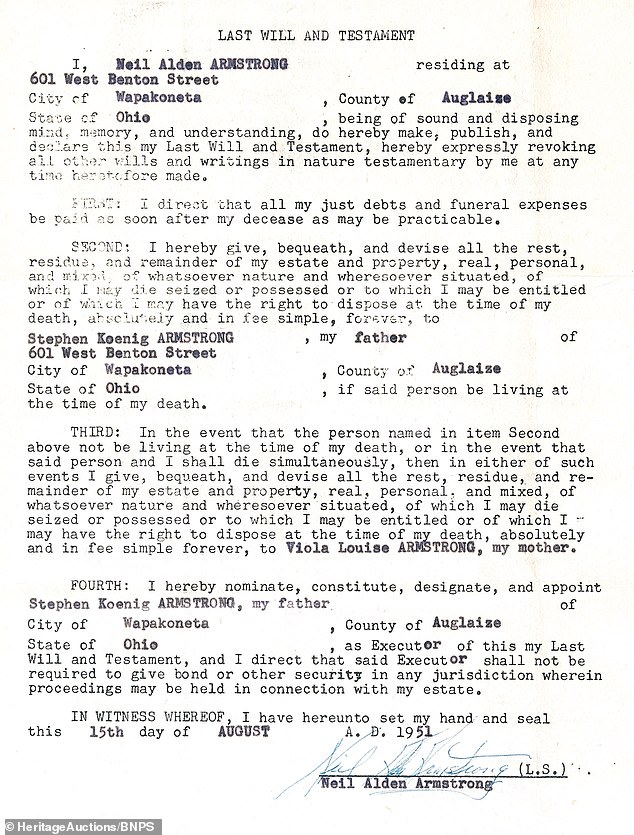
On August 15, 1951, a young Neil Alden Armstrong, just 21 years old, signed his Last Will and Testament while serving as a U.S. Navy pilot during the Korean War. This moment, though lesser-known compared to his later achievements in space exploration, reflects a deeply personal and significant event in his life—a moment of foresight, responsibility, and the realities of war.
Context: A Young Aviator in a War Zone
At the time, Armstrong was an ensign in the U.S. Navy, assigned to Fighter Squadron 51 (VF-51) aboard the aircraft carrier USS Essex (CV-9). The Korean War was in full swing, and he was flying the Grumman F9F Panther, a jet fighter used extensively in combat. Young aviators like Armstrong faced immense danger, engaging in high-risk combat missions over enemy territory.
With the constant threat of death, it was common practice for military personnel to draft their last will before heading into battle. Armstrong’s decision to formalize his will on August 15, 1951, was a solemn recognition of this risk.
Details of the Will
In his will, Armstrong made clear and simple provisions for his estate:
He appointed his father, Stephen Koenig Armstrong, as the primary beneficiary of his possessions.
If his father was no longer alive, the estate would go to his mother, Viola Louise Armstrong.
His father was also named the executor of the will, ensuring that his wishes were carried out.
This document shows the practical mindset of a young man facing war—acknowledging the possibility of death and ensuring his family was provided for.
The Risks He Faced
Armstrong’s combat missions were dangerous. On September 3, 1951, just weeks after signing his will, his F9F Panther was hit by enemy anti-aircraft fire during a low-altitude bombing run. The aircraft sustained severe damage, forcing Armstrong to eject at high speed. He successfully parachuted into friendly territory, where he was later rescued.
Had circumstances been different that day, his Last Will and Testament might have been enacted—justifying the precaution he took in signing it.
Ultimately, Armstrong survived the war, went on to become a test pilot, an astronaut, and the first person to walk on the Moon. However, this simple act of signing his will in 1951 reminds us of the uncertainties he faced long before his spacefaring days.
#NeilArmstrong #KoreanWar #MilitaryHistory #MomentsOfLife #MoofLife_Moment #MoofLife

Explore the Life Moments of
 AI Twin