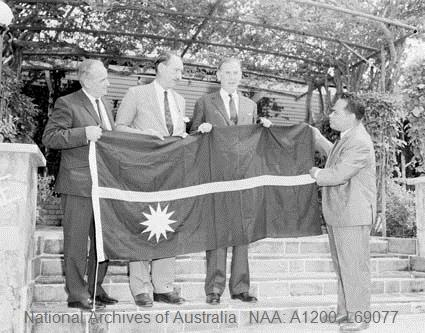
Nauru achieved self-governance
Nauru
Politics
Independence Movements
3 min read
Updated By: History Editorial Network (HEN)
Published:
Updated:
In January 1966, Nauru achieved self-governance, marking a significant milestone in its political history. This transition was followed by a two-year constitutional convention, culminating in full independence on January 31, 1968, under the leadership of its founding president, Hammer DeRoburt. A pivotal moment in Nauru's economic development occurred in 1967 when the citizens acquired the assets of the British Phosphate Commissioners. This strategic move laid the groundwork for the establishment of the Nauru Phosphate Corporation (NPC) in June 1970, which allowed local control over phosphate mining operations. The revenue generated from these mines positioned Nauruans among the wealthiest populations globally, showcasing the potential of natural resource management in small island nations. However, the journey was not without challenges; in 1989, Nauru initiated legal proceedings against Australia in the International Court, highlighting ongoing issues related to environmental and economic impacts stemming from phosphate mining. Nauru's path to self-governance and subsequent independence illustrates the complexities and opportunities faced by small island nations in the global arena. #mooflife #mof #MomentOfLife #Nauru #Self-governance #Independence #PhosphateMining #HammerDeroburt

Explore the Life Moments of
 AI Twin