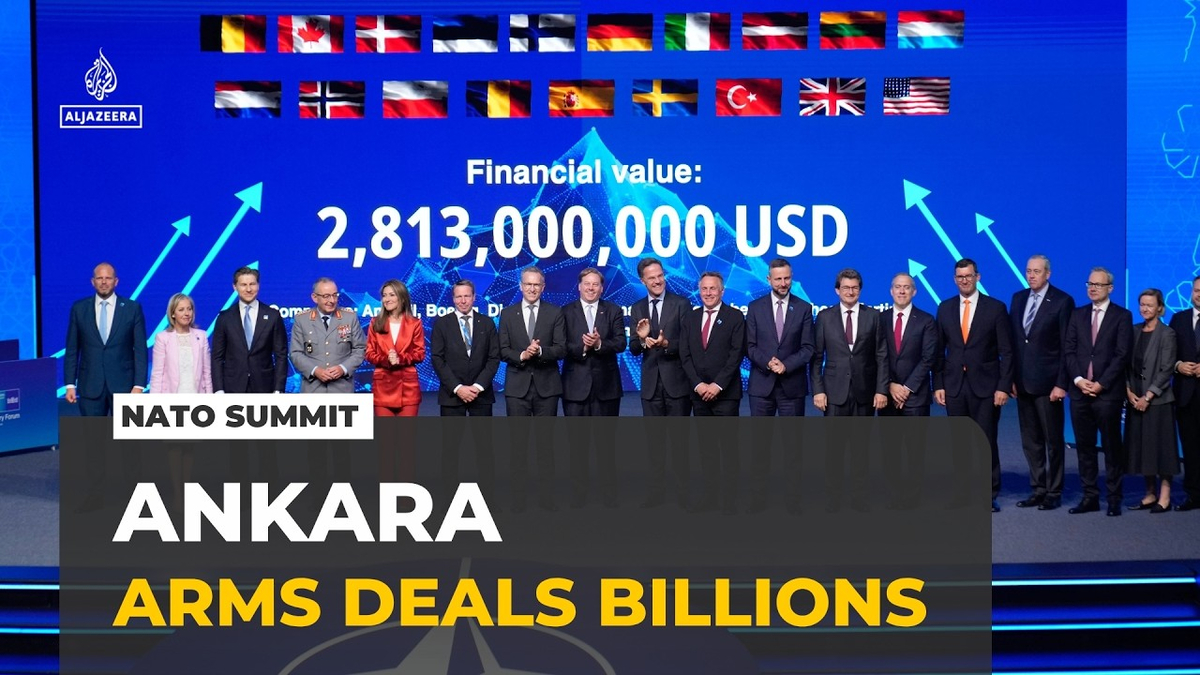
36th NATO Summit Held in Ankara Focuses on Collective Defence and Alliance Modernization
Beştepe Presidential Complex, Ankara, Turkey
Political
7 min read
Updated By: History Editorial Network (HEN)
Published:
The 36th NATO Summit was held in Ankara, Türkiye, on 07/07/2026 and 08/07/2026, bringing together heads of state and government from NATO's 32 member countries at the Beştepe Presidential Complex. Chaired by NATO Secretary General Mark Rutte, the summit focused on strengthening collective defence, enhancing defence industrial capacity, increasing support for Ukraine, and advancing what alliance leaders described as the next phase of NATO's strategic development. The meeting concluded with the adoption of the Ankara Summit Declaration, reaffirming NATO's commitment to Article 5 of the Washington Treaty and its 360 degree approach to deterrence and defence.
One of the summit's principal outcomes was a joint commitment to provide €70 billion in military assistance, training, and strategic support for Ukraine during 2026, alongside a pledge to maintain at least the same baseline level of support into 2027. Allied leaders also noted that European allies and Canada had increased their core defence investments by more than US$139 billion since the 2025 NATO Summit in The Hague, supporting the alliance's long term objective of moving toward 5 percent of GDP in defence spending by 2035. Leaders further approved more than US$50 billion in collective defence procurement projects aimed at expanding precision strike capabilities, integrated air and missile defence systems, and uncrewed military platforms.
The summit also introduced several new industrial and infrastructure initiatives. NATO formally launched the NATO Front Door for Industry, intended to simplify cooperation with commercial defence manufacturers and strengthen transatlantic industrial resilience. Allies additionally approved the Drone Edge initiative, a US$40 billion five year investment programme focused on counter drone technologies, alongside a €27 billion plan to modernize NATO's fuel infrastructure through upgraded pipelines and protected storage facilities across the alliance's eastern flank. These measures formed part of a broader effort to improve readiness and reinforce NATO's defence supply chains.
The gathering also featured several high profile bilateral meetings, including talks between United States President Donald Trump and Turkish President Recep Tayyip Erdoğan. Following their discussions, Trump said the United States would review certain defence restrictions affecting Türkiye and evaluate the country's possible return to the F-35 fighter aircraft programme. Ahead of the summit, the Ankara Governor's Office imposed a 13 day ban on public demonstrations and assemblies for security reasons. Despite the restrictions, anti NATO protests were reported in several Turkish cities, while local organizations stated that security operations before the summit resulted in the temporary detention of numerous activists, journalists, and demonstrators.
Why This Moment Matters:
The 2026 NATO Summit reaffirmed the alliance's collective defence commitments while introducing new long term investments in military capability, industrial cooperation, and infrastructure. The decisions taken in Ankara also reinforced continued support for Ukraine and reflected NATO's effort to adapt its defence posture to evolving security challenges.
#NATO
#AnkaraSummit
#Türkiye
#Ukraine
#CollectiveDefence
#MarkRutte
#InternationalRelations

Explore the Life Moments of
 AI Twin