End of the Forty Years' War
Myanmar
Historical Conflicts
Medieval History
Southeast Asian History
3 min read
Updated By: History Editorial Network (HEN)
Published:
Updated:
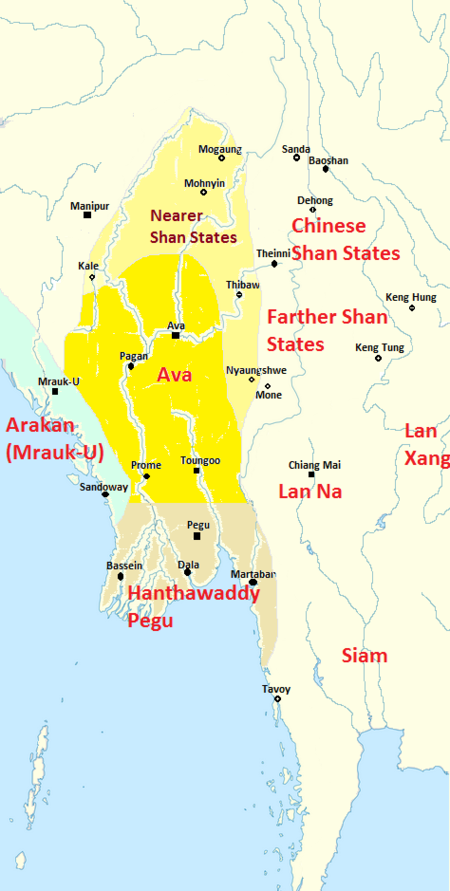
The Forty Years' War, a prolonged conflict between the kingdoms of Hanthawaddy and Ava, concluded with Hanthawaddy emerging victorious. This war significantly altered the political landscape of the region, leading to a shift in power dynamics. Following the end of hostilities, Hanthawaddy entered a period characterized by prosperity and cultural flourishing. The kingdom became the most powerful and prosperous among the post-Pagan kingdoms, particularly from the 1420s to the 1530s. Under the leadership of capable monarchs, Hanthawaddy capitalized on foreign trade, which contributed to its economic growth and stability.
During this golden age, Hanthawaddy not only thrived economically but also became a center for the Mon language and culture, as well as Theravada Buddhism. The kingdom's advancements in commerce and culture had a lasting impact on the region, fostering a rich cultural heritage that influenced neighboring areas. In contrast, Ava, once a formidable rival, began to decline in power and influence, marking a significant shift in the historical trajectory of these two kingdoms. The end of the Forty Years' War thus set the stage for Hanthawaddy's dominance in the region, shaping the socio-political landscape for years to come.
#mooflife
#MomentOfLife
#Hanthawaddy
#Ava
#FortyYears'War
#TheravadaBuddhism
#MonCulture

Explore the Life Moments of
 AI Twin