UNESCO adds Moroccan caftan to Intangible Cultural Heritage list
4 min read
Updated By: History Editorial Network (HEN)
Published:
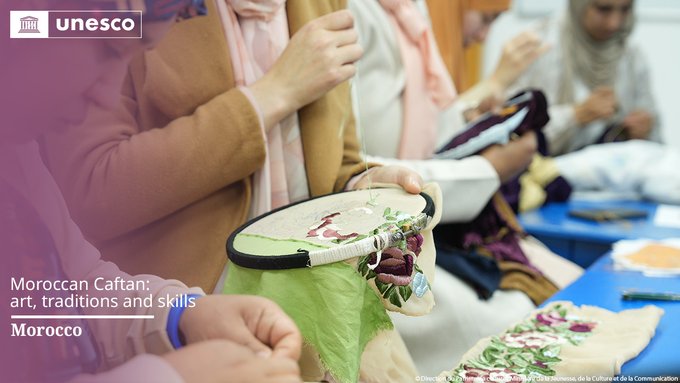
UNESCO has officially added the Moroccan caftan to its Intangible Cultural Heritage list, recognizing the traditional garment as an important symbol of Morocco’s cultural identity and heritage. The caftan, a long, flowing robe often adorned with intricate embroidery, beads, and metallic threads, has been a central part of Moroccan life for centuries, worn during weddings, religious celebrations, and other ceremonial occasions. Its craftsmanship reflects a blend of Arab, Berber, and Andalusian influences, highlighting Morocco’s rich history of artistic exchange and cultural synthesis. The UNESCO designation acknowledges the skills of artisans who preserve this centuries-old tradition, ensuring that knowledge of fabric selection, hand embroidery, and garment construction is transmitted across generations.
The inclusion of the Moroccan caftan on the Intangible Cultural Heritage list carries significant cultural, social, and economic implications. Culturally, it affirms the caftan as a living tradition, celebrating Morocco’s unique artistic expression and national identity. Socially, the recognition encourages younger generations to engage with traditional craftsmanship, fostering pride and continuity within local communities. Economically, the designation may boost tourism and the international fashion industry’s interest in Moroccan textiles, providing opportunities for artisans and small businesses. Overall, UNESCO’s recognition highlights the global importance of safeguarding cultural practices, emphasizing the caftan not just as clothing but as a symbol of heritage, creativity, and the enduring legacy of Moroccan artisanship.
Primary Reference
Moroccan Caftan: art, traditions and skills
Explore the Life Moments of
 AI Twin