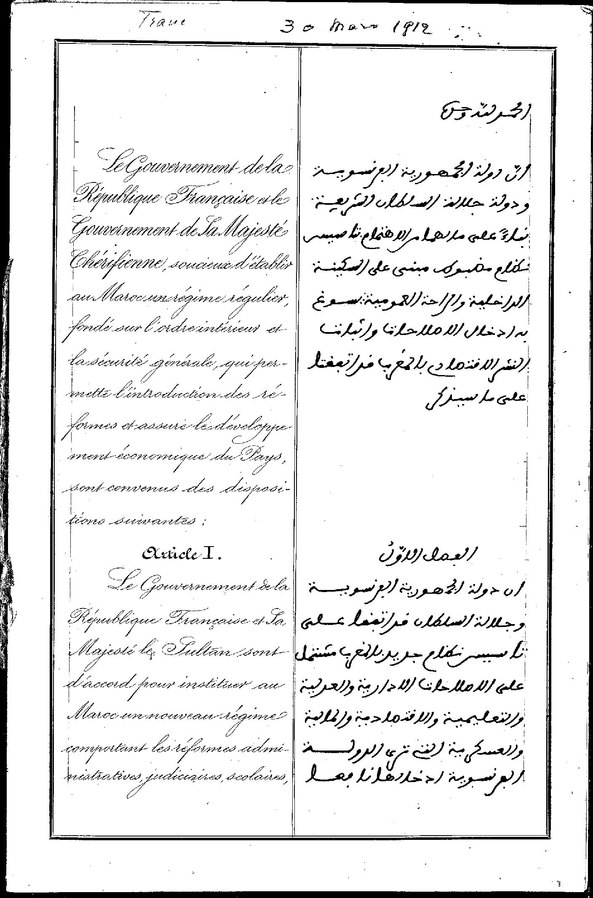
Treaty of Fez: French Protectorate Establishment
Colonialism
4 min read
Updated By: History Editorial Network (HEN)
Published:
In 1912, the Treaty of Fez was signed, placing Morocco under the French protectorate. The background of this event dates back to the imperialist ambitions of European powers in Africa. France was particularly interested in Morocco due to its strategic location and resources. Prior to the treaty, Morocco was dealing with internal conflicts and lacked a unified government to resist foreign influence effectively.
Under the terms of the treaty, Morocco retained its sovereignty and the Sultan remained the symbolic ruler. However, in reality, the French Resident-General held significant power and influence over the country's administration and foreign affairs. French presence in Morocco brought modernization, infrastructure development, and economic growth, but it also led to exploitation of resources and suppression of local uprisings against colonial rule.
The impact of the Treaty of Fez was profound. It marked the end of Morocco's independence and the beginning of a 44-year period of French protectorate. During this time, the French implemented policies that favored their interests, leading to social, economic, and cultural changes in the country. Moroccan resistance towards the French protectorate grew over the years, eventually culminating in the country's independence in 1956.
The Treaty of Fez remains a key historical event that shaped Morocco's trajectory towards independence and sovereignty. It serves as a reminder of the consequences of colonialism on the political and social fabric of a nation. The legacy of this treaty continues to influence diplomatic relations between Morocco and France, highlighting the complexities of their shared history.
#TreatyOfFez #Morocco #FrenchProtectorate #Colonialism #Independence
Primary Reference
Treaty of Fes - Wikipedia
Explore the Life Moments of
 AI Twin