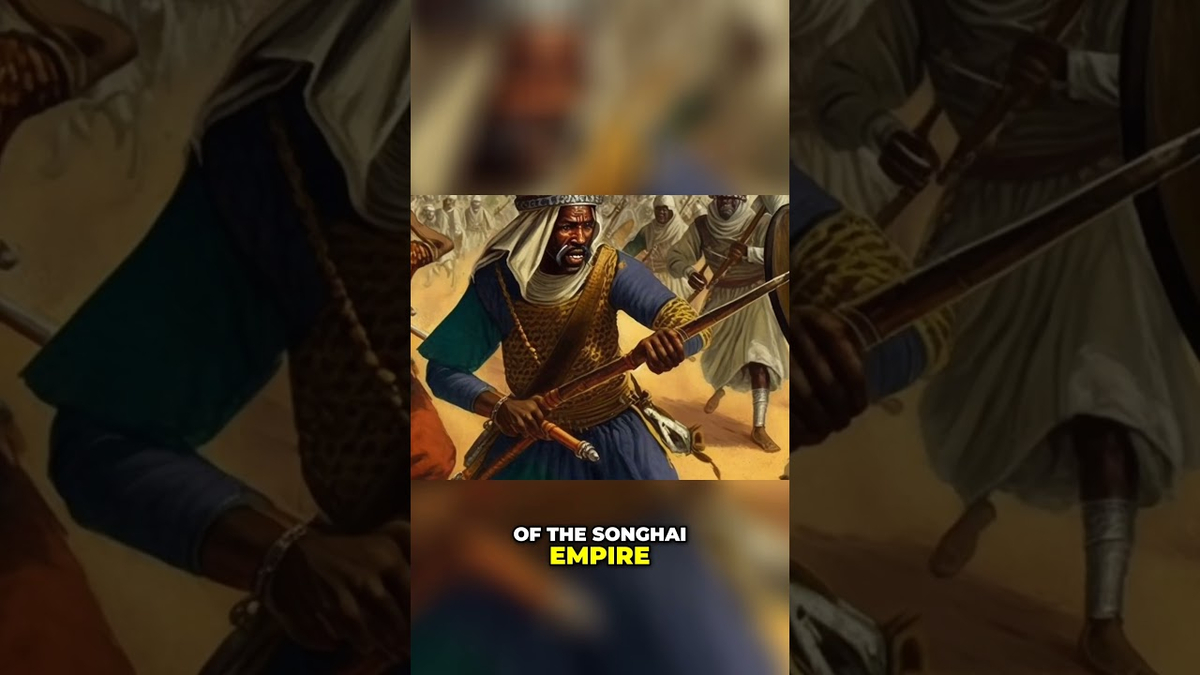
Fierce Battle in Tondibi
Military
4 min read
Updated By: History Editorial Network (HEN)
Published:
The Battle at Tondibi was a significant military engagement between the Moroccan army led by Sultan Ahmad I al-Mansur and the Songhai Empire forces in West Africa. This event marked a critical moment in the attempts of Sultan Ahmad I al-Mansur to expand his territory southward into the rich lands of the Songhai Empire. The Moroccan army, equipped with firearms and cavalry, faced the Songhai forces, who had a tradition of skilled infantry and cavalry but lacked advanced weaponry.
The battle unfolded with the Songhai forces launching a fierce assault, utilizing their knowledge of the terrain to their advantage. However, the Moroccan army's superior firepower and strategic maneuvers gradually turned the tide of the battle. The Songhai forces suffered heavy casualties, and their leader, Askia Ishaq II, was captured, bringing a decisive end to the conflict.
The defeat at Tondibi had far-reaching consequences for the Songhai Empire, leading to its decline and eventual collapse, while solidifying Moroccan control over the region. The victory not only expanded the Moroccan sultanate's influence in West Africa but also allowed them to gain control of important trade routes and resources.
The Battle at Tondibi demonstrated the impact of advanced military technology and strategic tactics in shaping the outcome of conflicts during this period. It also showcased the shifting power dynamics in the region, as the once-mighty Songhai Empire fell to the forces of the expanding Moroccan empire. This event remains a crucial moment in the history of North African and West African interactions.
#MoroccanEmpire #SonghaiEmpire #MilitaryHistory #WestAfricanHistory
Primary Reference
Fall of Africa's Greatest Empire | History Today

Explore the Life Moments of
 AI Twin