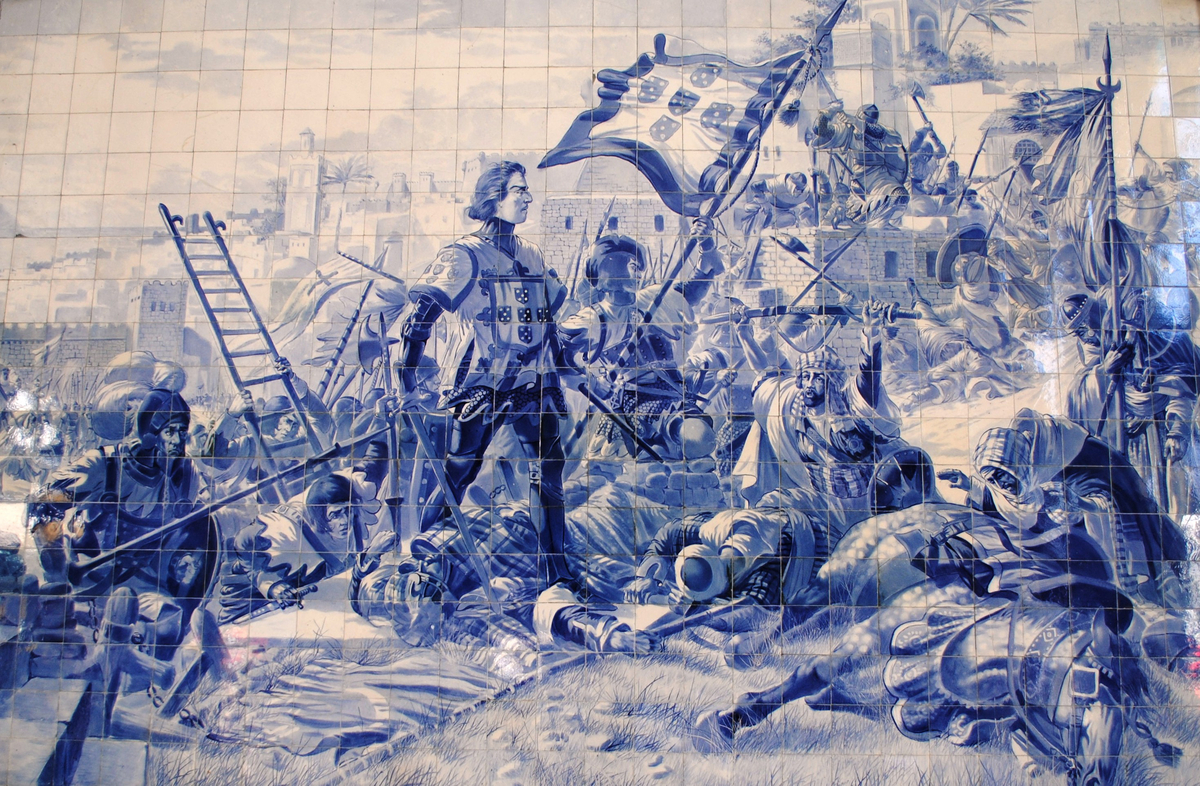
Battle of Ceuta: Portuguese Invasion Highlights.

Global Trade
Political
4 min read
Updated By: History Editorial Network (HEN)
Published:
The invasion of Morocco by the Portuguese reached its climax with the Battle of Ceuta. The city of Ceuta, strategically located on the northern coast of Africa, was a valuable trading post that the Portuguese sought to capture. This military campaign was part of the larger effort by European powers to expand their influence and control over trade routes in the region.
The Portuguese forces, led by Prince Henry the Navigator, launched a well-coordinated attack on Ceuta, using advanced naval and military tactics. Despite facing fierce resistance from the Moroccan defenders, the Portuguese managed to breach the city's walls and secure victory. The Battle of Ceuta marked the beginning of Portugal's overseas expansion, laying the groundwork for future colonial ventures in Africa and beyond.
The aftermath of the Battle of Ceuta had far-reaching consequences. The Portuguese occupation of Ceuta opened up new opportunities for trade and exploration in North Africa, while also fueling tensions with the neighboring Muslim powers. The event also served as a prelude to the Age of Discovery, during which European nations would establish vast overseas empires and dramatically reshape the global order.
The Battle of Ceuta remains a significant chapter in the history of European expansion into Africa. It symbolizes the clash of cultures and interests that characterized the era of exploration and colonization. The legacy of this event continues to be felt in modern-day relations between Europe and North Africa, as well as in the broader context of globalization and geopolitical dynamics.
#PortugueseExpansion #BattleofCeuta #EuropeanColonialism #MoroccanHistory
Primary Reference
MOROCCO IN THE EARLY ATLANTIC WORLD, 1415-1603 A ...
Explore the Life Moments of
 AI Twin