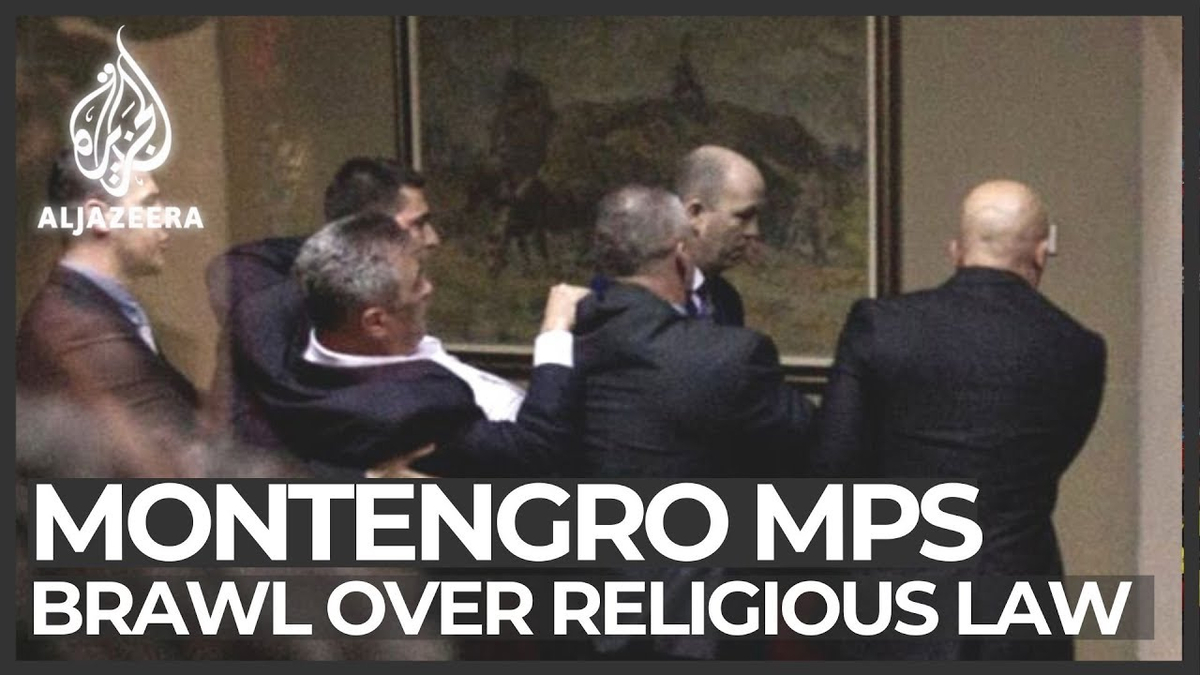
Law on Religion in Montenegro Sparks Protests and Political Unrest
Montenegro
Political
Religion
4 min read
Updated By: History Editorial Network (HEN)
Published:
Updated:
The Parliament of Montenegro passed the Law on Freedom of Religion or Beliefs and Legal Status of Religious Communities. The law stipulated that religious communities had to provide proof of property ownership from before 1918, or the property would become state-owned. The Serbian Orthodox Church (SOC), the largest religious institution in Montenegro, claimed this law targeted their assets specifically, triggering widespread public dissent.
The SOC, backed by its followers, spearheaded numerous protests. Demonstrations included large marches and prayer gatherings, particularly in Podgorica and other key cities. Protestors, expressing their concerns, perceived the legislation as an attack on religious freedom and their heritage. The police, ensuring safety and public order, occasionally clashed with demonstrators.
Approximately 70% of Montenegrins identify as Orthodox Christians, with a significant portion adhering to the SOC. As a consequence, the legislative change had extensive socio-political repercussions. Civil unrest grew, influencing Montenegro’s internal politics and relations with neighboring Serbia, where the SOC's headquarters is based. The incident also attracted international attention, reflecting on issues regarding property rights and religious freedoms.
The law's enactment and the consequent protests illustrate intertwined issues of national identity, religion, and politics in Montenegro. It remains a critical incident in the country’s contemporary history, highlighting societal divisions and the role of religion in public life.
#Montenegro #ReligiousFreedom #SOC #Protests #MoofLife

Explore the Life Moments of
 AI Twin