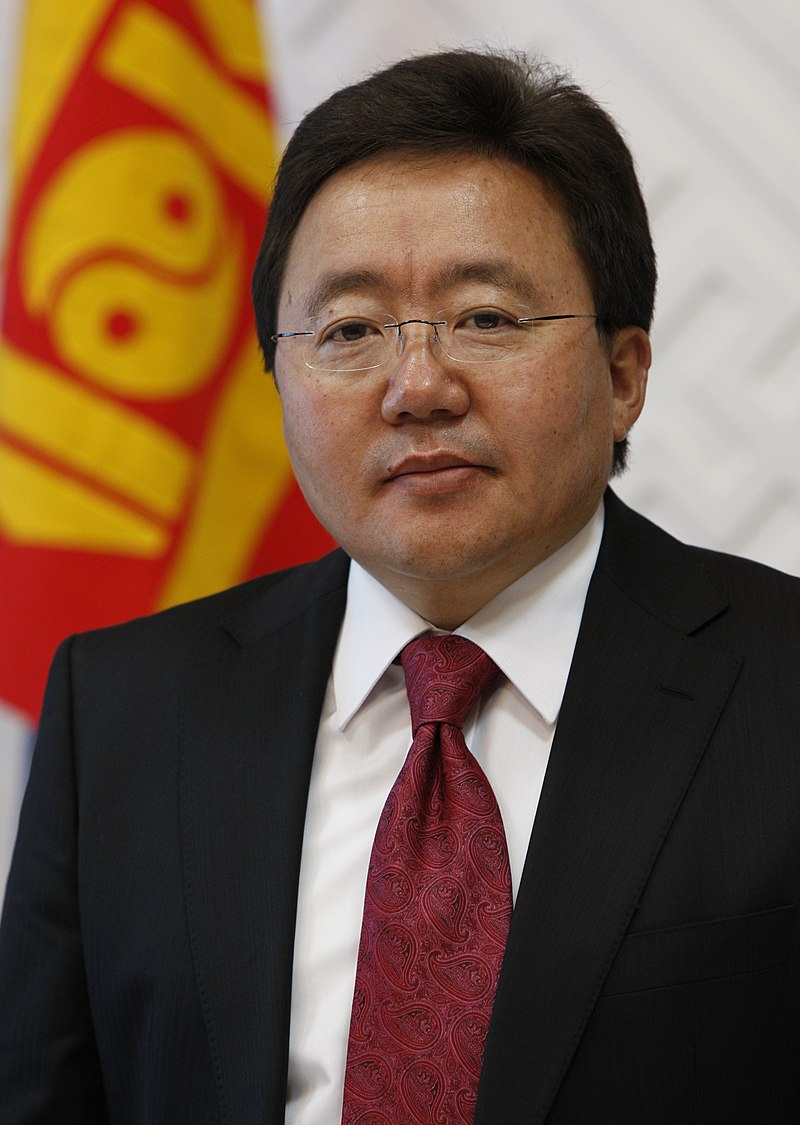
Tsakhiagiin Elbegdorj from Democratic Party, was re-elected in the 2013 Mongolian presidential election.
Mongolia
8 min read
Updated By: History Editorial Network (HEN)
Published:
On June 26, 2013, Tsakhiagiin Elbegdorj, the candidate from Mongolia's Democratic Party, was re-elected as the President of Mongolia in the 2013 presidential election. This victory marked Elbegdorj's second consecutive term as president, allowing him to continue his leadership of the country during a period of significant political and economic transition.
Background
Tsakhiagiin Elbegdorj, a prominent figure in Mongolian politics, had already established a strong reputation as a reformer and advocate for democracy. He played a key role in Mongolia's peaceful transition from a Soviet-style communist state to a democratic system in the early 1990s. Elbegdorj was one of the founders of the Mongolian Democratic Union, which led the pro-democracy movement, and he served as Prime Minister of Mongolia twice before being elected president for the first time in 2009.
His presidency was characterized by efforts to strengthen democratic institutions, combat corruption, and promote transparency in government. Under his leadership, Mongolia sought to balance its relationships with its two powerful neighbors, China and Russia, while also pursuing closer ties with the West, particularly the United States and European Union.
The 2013 Presidential Election
The 2013 presidential election was seen as a critical test for Mongolia's young democracy. Elbegdorj faced strong competition from two other candidates:
Badmaanyambuugiin Bat-Erdene, the candidate of the Mongolian People's Party (MPP), which was the main opposition party. Bat-Erdene was a well-known figure in Mongolia, celebrated as a traditional wrestler and a respected politician who advocated for the protection of Mongolia's environment and natural resources.
Natsagiin Udval, the candidate of the Mongolian People's Revolutionary Party (MPRP) and the first woman to run for president in Mongolia. Udval, who was serving as the Minister of Health at the time, represented the more left-leaning faction of Mongolia's political spectrum.
The election campaign focused on key issues such as economic development, the management of Mongolia's vast mineral wealth, and the need for greater social equity. Mongolia's economy had been booming in the years leading up to the election, largely due to the mining sector, but there were growing concerns about income inequality, corruption, and the environmental impact of mining.
Election Results
Tsakhiagiin Elbegdorj won the election with approximately 50.23% of the vote, securing a narrow victory over his main rival, Badmaanyambuugiin Bat-Erdene, who received about 41.97%. Natsagiin Udval garnered around 8% of the vote. Despite the relatively close race, Elbegdorj's victory was seen as an endorsement of his policies and leadership style.
Significance of the Re-Election
Elbegdorj's re-election allowed him to continue pursuing his reform agenda, which included efforts to further strengthen Mongolia's democratic institutions, improve governance, and ensure that the benefits of economic growth were more widely shared among the population.
During his second term, Elbegdorj continued to advocate for human rights, environmental protection, and the fight against corruption. He also played an active role in international diplomacy, representing Mongolia on the global stage and promoting the country's "third neighbor" policy, which sought to build relationships with countries beyond its immediate neighbors, China and Russia.
Legacy
Tsakhiagiin Elbegdorj's presidency is remembered for its emphasis on democratic governance and efforts to address some of the challenges facing Mongolia during a time of rapid economic change. His re-election in 2013 reinforced his position as a key figure in Mongolia's post-communist history and solidified his legacy as a champion of democracy in the region.
#MomentsOfLife #MoofLife_Moment #MoofLife #Mongolia #Elbegdorj #MongolianPolitics #PresidentialElection #DemocraticGovernance
Primary Reference
2013 Mongolian presidential election - Wikipedia

Explore the Life Moments of
 AI Twin