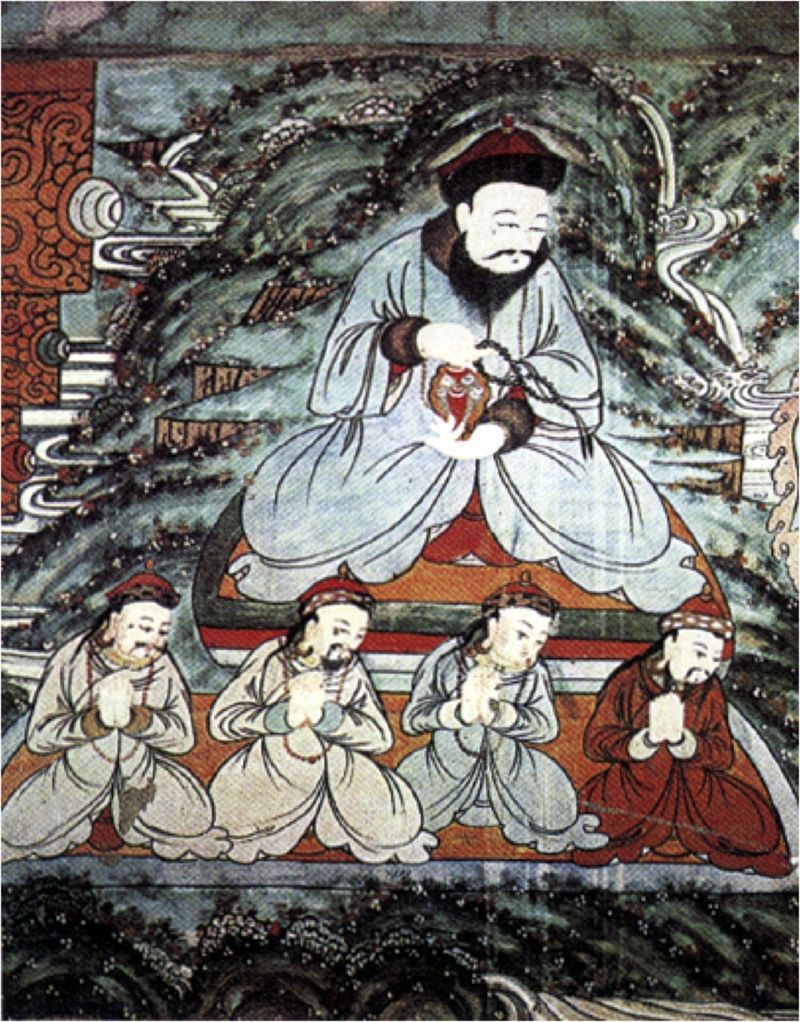
Altan Khan's meeting with the 3rd Dalai Lama, Sonam Gyatso, marking the start of an alliance between the Mongols and Tibet
Mongolia
Religion
10 min read
Updated By: History Editorial Network (HEN)
Published:
In 1578, a historic meeting took place in Mongolia that would have profound and lasting effects on the religious, cultural, and political landscapes of Central Asia. This meeting was between Altan Khan, one of the most powerful Mongol leaders of the time, and Sonam Gyatso, who would later be recognized as the 3rd Dalai Lama. This encounter not only marked the beginning of a deep alliance between the Mongols and Tibet but also laid the foundation for the spread of Tibetan Buddhism among the Mongols and the institutionalization of the Dalai Lama as a central figure in Tibetan Buddhism.
Background: The Mongols and Tibet
The relationship between the Mongols and Tibet dates back to the time of the Mongol Empire, particularly under the rule of Kublai Khan in the 13th century. Kublai Khan had established a patron-priest relationship with the Sakya school of Tibetan Buddhism, granting the lamas of Sakya significant influence and control over Tibet in exchange for religious and spiritual guidance. This relationship, however, declined with the fall of the Yuan Dynasty, and by the 16th century, Tibetan Buddhism’s influence over the Mongols had waned.
Altan Khan, a descendant of Genghis Khan and leader of the Tümed Mongols, sought to revive the power and unity of the Mongol nation. Recognizing the potential of Tibetan Buddhism to provide ideological support and legitimacy to his rule, Altan Khan looked to re-establish a spiritual connection with Tibet. This led to his invitation to Sonam Gyatso, a prominent lama of the Gelug school of Tibetan Buddhism, to visit him in Mongolia.
The Meeting of 1578
In 1578, Altan Khan and Sonam Gyatso met at the site of Kökö Khota (modern-day Hohhot, Inner Mongolia). The meeting was of great significance, as it resulted in the formal establishment of a spiritual and political alliance between the Mongols and the Gelug school of Tibetan Buddhism.
During the meeting, Altan Khan bestowed upon Sonam Gyatso the title of "Dalai Lama," a Mongolian term meaning "Ocean of Wisdom." This title was retroactively applied to his two predecessors, making Sonam Gyatso the 3rd Dalai Lama. The term "Dalai Lama" thus became synonymous with the spiritual leader of the Gelug school and eventually the foremost spiritual leader of Tibetan Buddhism as a whole.
In return, Sonam Gyatso recognized Altan Khan as an incarnation of the Bodhisattva Manjushri, the embodiment of wisdom in Mahayana Buddhism. This mutual recognition solidified a relationship where Altan Khan provided protection and patronage to the Gelug school, while the Dalai Lama offered spiritual guidance and religious legitimacy to Altan Khan’s rule.
Impact on Mongolian and Tibetan Relations
The meeting between Altan Khan and the 3rd Dalai Lama had far-reaching consequences:
1. Spread of Tibetan Buddhism among the Mongols:
Following the meeting, Tibetan Buddhism, particularly the Gelug school, began to spread rapidly among the Mongol tribes. Altan Khan’s endorsement of the religion led to its widespread adoption across Mongolia, where it became deeply ingrained in Mongol culture and identity. Monasteries were established, and the teachings of the Gelug school became central to Mongolian religious life.
2. Institutionalization of the Dalai Lama:
The title of Dalai Lama, given to Sonam Gyatso by Altan Khan, became the central institution in Tibetan Buddhism. The successive Dalai Lamas would go on to play a crucial role in Tibetan religious, political, and cultural life. The relationship with the Mongols also provided the Dalai Lama with military and political backing, which would prove essential in maintaining the Gelug school’s dominance in Tibet.
3. Strengthening of Mongol-Tibetan Ties:
The alliance forged in 1578 led to a lasting bond between the Mongols and Tibetans. The Mongols, who had a long tradition of shamanism and Tengriism, found in Tibetan Buddhism a unifying force that could bring stability and cohesion to their fractured society. This spiritual alliance also provided Tibet with a powerful ally in the Mongols, who would come to the defense of Tibetan Buddhism on several occasions in the future.
4. Cultural Exchange:
The meeting facilitated a rich cultural exchange between Tibet and Mongolia. Tibetan Buddhism influenced Mongolian art, literature, and religious practices, while Mongolian support helped sustain and spread Tibetan Buddhist institutions.
Legacy
The 1578 meeting between Altan Khan and the 3rd Dalai Lama was a pivotal moment in the history of Central Asia. It not only solidified Tibetan Buddhism's influence in Mongolia but also established a precedent for the relationship between religious leaders and political power in the region. The Dalai Lama's role as both a spiritual leader and a political figure was greatly strengthened by this alliance, and the Gelug school gained the support it needed to become the dominant force in Tibetan Buddhism.
The effects of this meeting can still be seen today in the deep-rooted Buddhist traditions in Mongolia and the enduring importance of the Dalai Lama in Tibetan Buddhism. This alliance laid the groundwork for centuries of religious and cultural exchange that would shape the identities of both the Mongols and Tibetans.
#MomentsOfLife #MoofLife_Moment #MoofLife #Mongolia #Tibet #DalaiLama #AltanKhan #Buddhism #CulturalHistory #CentralAsia
Primary Reference
Dalai Lama - Wikipedia

Explore the Life Moments of
 AI Twin