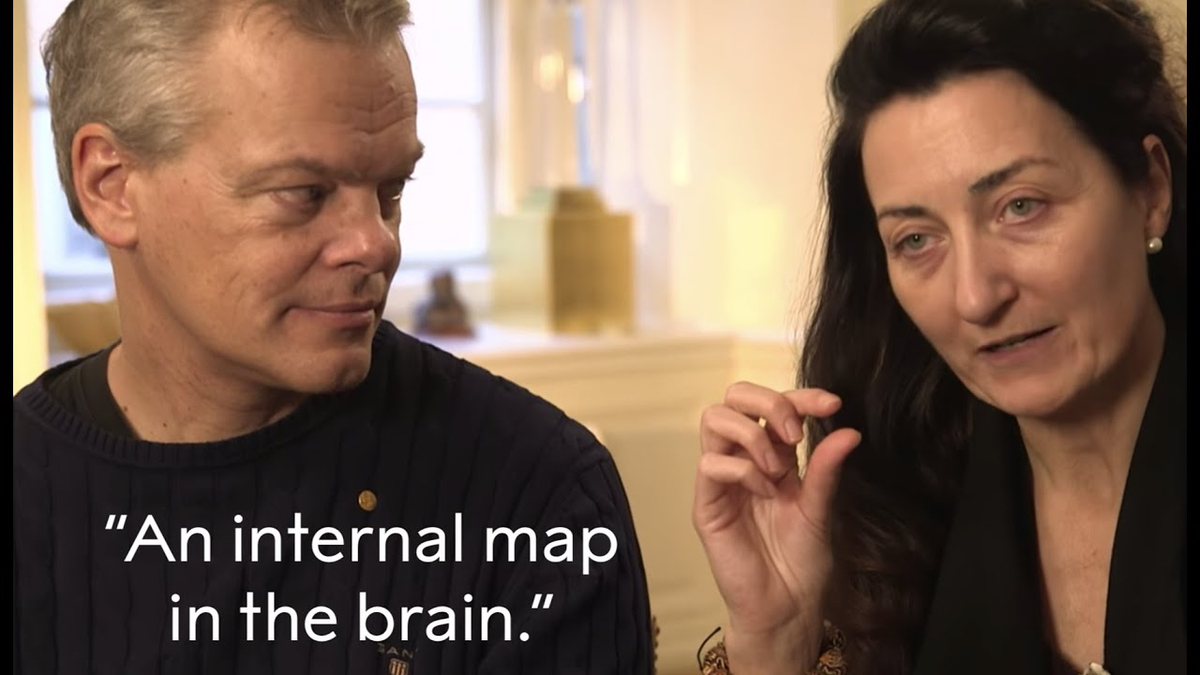
Nobel Prize for Discovery of Brain Positioning Cells
Neuroscience
Awards
Cognitive Science
4 min read
Updated By: History Editorial Network (HEN)
Published:
Updated:
The Nobel Prize awarded to John O'Keefe, May-Britt Moser, and Edvard Moser recognized their groundbreaking research on brain positioning cells, which are essential for understanding how the brain navigates and forms memories. This discovery revealed that certain neurons in the brain, known as place cells, activate when an individual is in a specific location, effectively creating a cognitive map of the environment. The work of these researchers has provided significant insights into the neural mechanisms underlying spatial memory and navigation, which are crucial for daily functioning and survival. Their findings have implications for various fields, including psychology, neuroscience, and even robotics, as they enhance our understanding of how organisms interact with their surroundings and remember locations.
The impact of this discovery extends beyond academic research; it has practical applications in addressing cognitive disorders. For instance, understanding how these positioning cells work can inform strategies for treating conditions such as Alzheimer's disease, where memory and navigation abilities are compromised. The research has also sparked further studies into the brain's spatial processing capabilities, leading to advancements in technologies that mimic these natural navigation systems. Overall, the work of O'Keefe, Moser, and Moser has opened new avenues for exploring the complexities of the brain and its functions, highlighting the intricate relationship between memory, navigation, and cognitive health.
#mooflife
#MomentOfLife
#NobelPrize
#BrainResearch
#Memory
#Navigation
#CognitiveScience
Primary Reference
Nobel Prize in Physiology or Medicine 2014

Explore the Life Moments of
 AI Twin