Microsoft's release of Windows 10
Location: Global
Technology
Software
Operating Systems
3 min read
Updated By: History Editorial Network (HEN)
Published:
Updated:
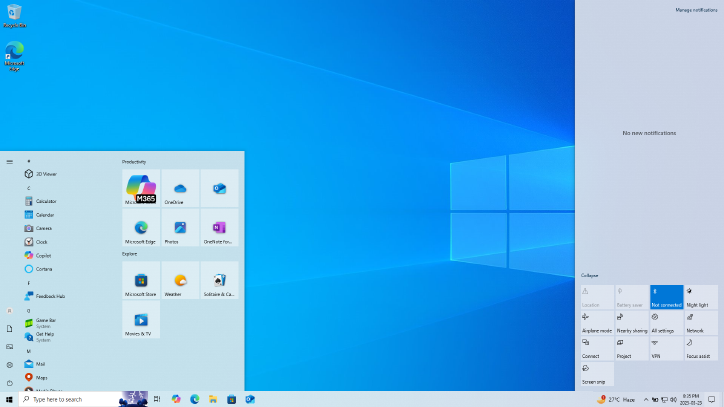
On 29/07/2015, Microsoft officially released Windows 10, making the operating system available as a free upgrade for eligible users of Windows 7 and Windows 8.1. The launch took place across 190 countries and marked Microsoft’s effort to unify the user experience across PCs, tablets, and smartphones. Windows 10 reintroduced the Start menu, combined with live tiles, and introduced Microsoft Edge as the new default browser alongside the Cortana digital assistant.
Microsoft offered the free upgrade for one year to home users running genuine versions of Windows 7 and Windows 8.1. The release introduced Windows Hello for biometric authentication using facial recognition or fingerprints, and Continuum, which allowed devices such as convertibles and tablets to automatically switch between desktop and touch-optimized interfaces. Windows 10 also added Xbox integration, enabling users to stream games from an Xbox One console directly to a Windows 10 PC over a local network.
The company described Windows 10 as a platform that would receive ongoing updates rather than large standalone releases. This approach shifted Windows toward a continuous update model, with feature improvements and security updates delivered periodically. The July 2015 launch established Windows 10 as a unified operating system across multiple device categories within Microsoft’s ecosystem.
#mooflife
#MomentOfLife
#Windows10
#Microsoft
#OperatingSystem
#SoftwareRelease
#Technology
Primary Reference
History of Microsoft

Explore the Life Moments of
 AI Twin